Pork loin is lean enough to dry out and large enough to make timing confusing. The usual “minutes per pound” rule is especially weak in a smoker: a long, narrow 5-pound loin may finish before a short, thick 4-pound roast because heat has a shorter distance to travel.
For a dependable plan, measure the roast’s diameter, smoke at 250°F, and keep it on the heat until the coldest thick area reaches 145°F. Rest for at least 3 minutes before slicing.
Smoked Pork Loin Time by Diameter
| Thickest diameter | Common roast size | At 250°F | Start checking |
|---|---|---|---|
| 2 1/2 to 3 inches | 2 to 3 pounds | 1 1/2 to 2 1/4 hours | At 1 1/4 hours |
| 3 to 3 1/2 inches | 3 to 4 pounds | 2 to 3 hours | At 1 3/4 hours |
| 3 1/2 to 4 inches | 4 to 5 pounds | 2 1/2 to 3 1/2 hours | At 2 1/4 hours |
| More than 4 inches | Large or tied roast | 3 to 4+ hours | At 2 1/2 hours |
The ranges assume a fully thawed boneless loin and a smoker already stable at 250°F. Bone-in loins, unusually cold weather, and frequent lid opening can extend the cook.
Do not use the table as a doneness test. The USDA fresh-pork guidance requires pork roasts to reach 145°F before leaving the heat and to rest for at least 3 minutes.
Pork Loin Is Not Pork Tenderloin
| Feature | Pork loin | Pork tenderloin |
|---|---|---|
| Typical shape | Wide, long roast | Small, narrow tapered muscle |
| Typical package weight | 2 to 5 pounds or more | About 3/4 to 1 1/2 pounds each |
| Fat | May have a thin fat cap | Very lean with silver skin |
| Smoking time | Usually measured in hours | Usually much faster |
| Best serving style | Roast slices | Medallions |
If the package contains two narrow tapered pieces, you probably have tenderloins. Do not apply this timing table. Our separate smoked pork tenderloin article will own that faster cut and link back here for comparison.
Ingredients and Equipment
Ingredients
- 1 boneless pork loin roast, 2 to 5 pounds
- Kosher salt
- 1 tablespoon yellow mustard or neutral oil as a light binder
- 1 tablespoon paprika
- 1 teaspoon black pepper
- 1 teaspoon garlic powder
- 1 teaspoon onion powder
- Optional: 1 teaspoon dried thyme or crushed rosemary
If your store-bought rub contains salt, reduce the dry-brine salt. A heavy salty rub on a lean roast can dominate every slice.
Equipment
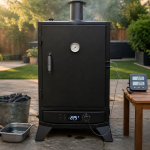
- Outdoor smoker capable of holding 250°F
- Leave-in food probe and grate-level ambient probe
- Fast instant-read thermometer
- Ruler or measuring tape for roast diameter
- Clean board and carving knife
- Apple, cherry, pecan, or maple smoking wood
How to Smoke Pork Loin at 250°F
1. Confirm the cut and measure it
Read the label, then measure the thickest diameter. Record both diameter and weight, but use diameter to select the first checking time. Trim loose flaps and silver skin. Leave a thin, even fat cap if the roast has one.
2. Dry-brine for 4 to 24 hours
Season lightly with kosher salt and refrigerate the roast uncovered on a rack. A dry brine gives salt time to move inward while drying the surface for a better crust.
Keep raw pork below ready-to-eat food. Do not reuse the raw tray for the cooked loin.
3. Preheat the smoker
Stabilize the cooker at 250°F. Add a modest amount of mild wood. Apple and cherry produce a lighter profile; pecan is a little deeper. Check our wood pairing guide if you want to blend woods.
A current ThermoWorks smoked pork loin guide also recommends the 225 to 250°F range. Lower heat slows the temperature climb, but 250°F gives a practical balance of smoke and timing.
4. Apply the rub
Mix the paprika, pepper, garlic, onion, and herbs. Coat the loin very lightly with mustard or oil, then apply the rub evenly. The binder should not form a wet paste.
If the fat cap is thicker than about 1/4 inch, trim it down. You may score only the fat shallowly, but do not cut grooves into the lean meat.
5. Place the probe in the true center
Insert the leave-in probe from one end or the side so its sensing tip lands in the center of the thickest solid section. Avoid fat seams and do not let the tip exit into open air.
Clip the ambient probe near the roast without touching meat or metal. The smoker controller may show a different temperature from the grate where the food sits.
6. Smoke without chasing the clock
Place the loin fat-side up if it has a cap. Close the lid and let the smoker recover. Rotate only if the cooker has a clear hot side.
Begin spot-checking at the early time for your diameter. Sweep an instant-read thermometer through several thick areas. A single leave-in reading can miss a colder section.
7. Finish at 145°F—not below it
Keep the pork on the heat until the coldest thick-area reading reaches at least 145°F. Smoking at a moderate temperature usually produces less carryover rise than a hot oven, so do not assume a 138 or 140°F roast will coast to the federal minimum after removal.
Carryover cooking may raise the temperature a few degrees during the rest. Treat that as a quality observation, not permission to remove the pork before it is safe.
8. Rest and slice
Rest for at least 3 minutes; 10 to 15 minutes is more practical for a multi-pound roast. Tent loosely with foil. Slice across the roast into 1/4- to 1/2-inch pieces.
Safely cooked pork can remain slightly pink. The thermometer reading, not color, confirms the endpoint.
Diameter-First Planning Example
Imagine two pork loins:
- Roast A weighs 4 1/2 pounds and measures 3 inches across.
- Roast B weighs 3 1/2 pounds and measures nearly 4 inches across.
Roast A is heavier because it is longer, but its center is closer to the hot surface. Roast B is lighter but thicker, so the heat path is longer. Roast B may finish later. This is why a fixed minutes-per-pound formula can make a lean loin dry.
Common Pork Loin Problems
| Problem | Likely cause | Practical fix |
|---|---|---|
| Dry slices | Roast cooked well beyond 145°F | Start checking by diameter and verify several areas |
| Center unsafe while one end is done | Uneven shape or off-center probe | Place probe in the thickest section and rotate only for a known hot spot |
| Crust too salty | Dry brine plus salty commercial rub | Use a salt-free rub after dry-brining |
| Bitter exterior | Too much heavy smoke | Use a smaller mild-wood dose and clean airflow |
| Rub falls off | Wet surface or heavy binder | Dry the loin and use only a thin binder film |
Should You Wrap or Spritz Pork Loin?
Usually, no. Pork loin does not have a long stall and does not need hours of collagen breakdown. Wrapping softens the crust, while frequent spritzing cools the surface and extends the cook.
If one area becomes too dark, shield that patch loosely with foil. That targeted fix is better than wrapping the whole roast.
Flavor Variations
Apple and sage
Use sage, black pepper, garlic, and apple wood. Add a thin unsweetened apple glaze only near the end if desired.
Mustard and herb
Use a light Dijon binder with thyme, rosemary, garlic, and pepper. Keep the mustard layer thin so smoke can reach the surface.
Barbecue
Use paprika, pepper, garlic, and onion. Brush on a thin sauce layer during the final 10 minutes. Early sugary sauce can darken before the center reaches 145°F.
Frequently Asked Questions
How long does a 4-pound pork loin take at 250°F?
A 4-pound loin commonly needs around 2 to 3 1/2 hours, but its diameter determines where it falls in that range. Begin checking around 1 3/4 to 2 1/4 hours and finish at 145°F.
What is the best temperature for smoking pork loin?
250°F is a useful starting point. It gives the roast time around smoke without making the cook unnecessarily long. The food endpoint is 145°F plus at least a 3-minute rest.
Does pork loin need to reach 160°F?
Not under current USDA guidance for an intact pork roast. The minimum is 145°F before removal plus a 3-minute rest. Ground pork still has a 160°F minimum.
Can I smoke pork loin and finish it later?
Do not partially cook pork, refrigerate it, and finish later. If you use a multi-stage method, transfer the roast immediately from one heat source to the next and continue cooking to 145°F.
Why is my pork still pink?
Safely cooked pork can be pink because of the cooking method or ingredients. Verify several spots at 145°F and complete the rest rather than relying on color.
The Bottom Line
Smoked pork loin stays juicy when you plan by diameter, not just weight. Hold the smoker at 250°F, place the probe in the true center, check several thick areas, and keep the roast on heat until every cold spot reaches at least 145°F. Rest for at least 3 minutes before slicing.
For a smaller, faster cut, wait for our separate pork tenderloin method. If you want a tougher cut intended for pulling, start with our beginner-friendly meats to smoke before choosing a shoulder. You can also compare a chop-specific approach in our smoked pork chop guide. Happy smoking!