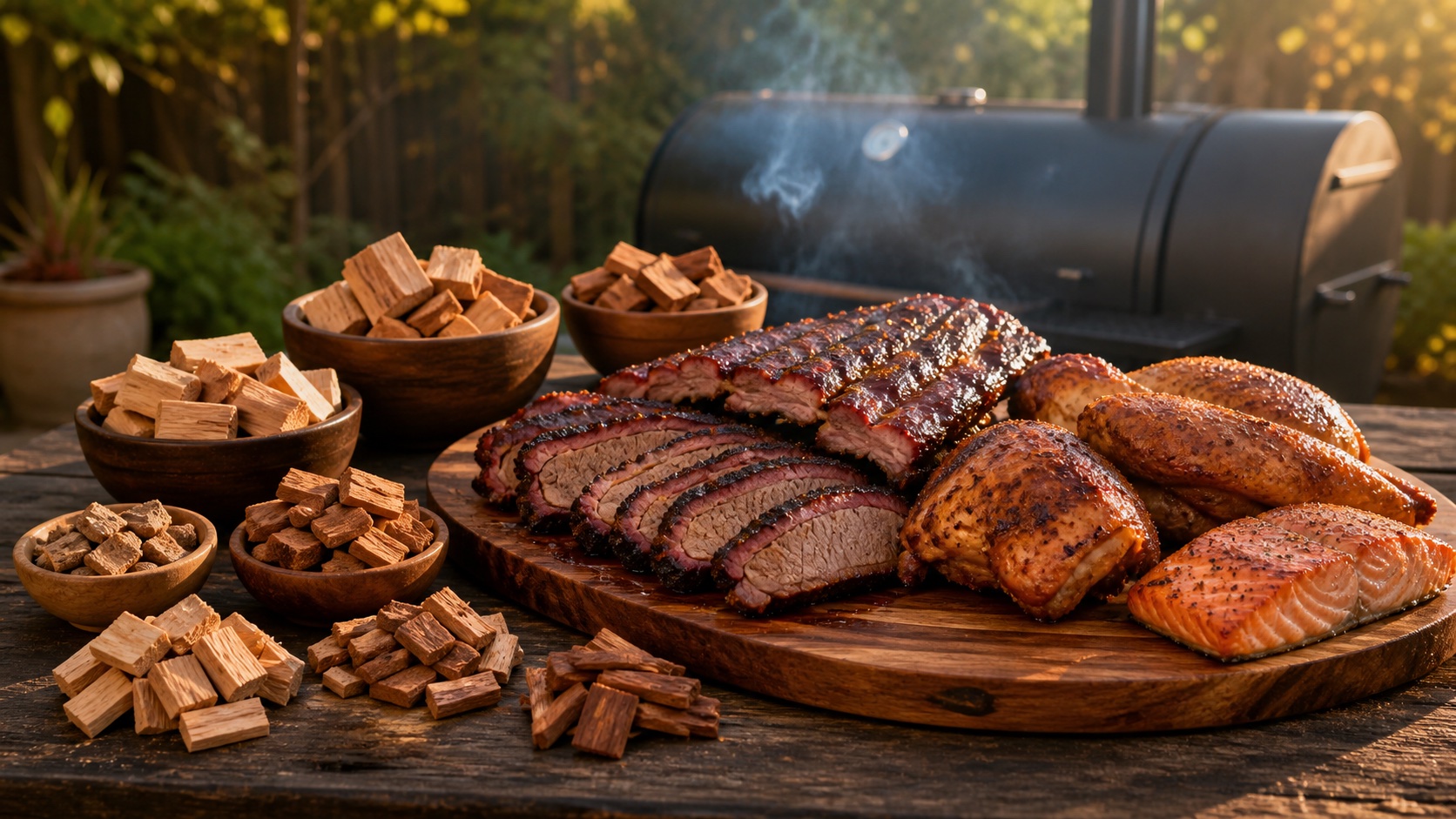
Choosing smoking wood should be simple: match the wood to the meat, light a clean fire, and let the smoker do its work. Yet the wrong choice can make an otherwise excellent brisket taste bitter, bury delicate fish under heavy smoke, or leave chicken with barely any wood-fired character.
The best wood for smoking meat depends on three things: the food, the length of the cook, and how much smoke flavor you want. Oak is the safest all-purpose choice. Hickory brings a stronger, bacon-like profile to pork and beef. Apple, cherry, and maple are gentler options for poultry, pork, seafood, and vegetables. Mesquite is the boldest common smoking wood and works best in small amounts or during shorter cooks.
This 2027 guide gives you a practical wood-pairing chart, explains the major hardwood flavors, and shows you how to avoid harsh smoke. Whether you use an offset smoker, charcoal grill, electric smoker, or pellet grill, the same basic rule applies: begin with a mild, clean fire and add intensity only when the food can handle it.
Quick Wood and Meat Pairing Chart
If you want a fast answer, use the chart below. The pairings are starting points, not unbreakable rules. Your rub, sauce, smoker design, and personal preference can all change the final choice.
| Smoking wood | Flavor strength | Best foods | Useful tip |
|---|---|---|---|
| Oak | Medium | Brisket, beef ribs, pork, lamb, poultry | Use alone or as a neutral base for stronger and sweeter woods. |
| Hickory | Medium-strong | Pork shoulder, ribs, bacon, brisket, chicken | Start conservatively on long cooks because the flavor builds over time. |
| Pecan | Medium | Pork, poultry, beef, lamb, fish | A sweeter, softer alternative when hickory seems too forceful. |
| Mesquite | Strong | Steak, beef ribs, burgers, lamb, game | Best for short cooks or blended with oak; easy to overuse. |
| Apple | Mild | Pork, chicken, turkey, fish, vegetables | Pairs especially well with sweet rubs and glazes. |
| Cherry | Mild-medium | Pork, poultry, beef, fish, vegetables | Adds a gentle fruit note and can support attractive exterior color. |
| Maple | Mild | Ham, poultry, pork, vegetables, cheese | Choose it when you want a light sweetness without heavy smoke. |
| Alder | Very mild | Salmon, white fish, shellfish, chicken, pork | Ideal for delicate foods that stronger woods can overwhelm. |
How Smoking Wood Changes Flavor
Smoking wood does more than make visible smoke. As hardwood heats and burns, it releases aromatic compounds that settle on the moist surface of the food. That flavor is affected by the species of wood, combustion quality, airflow, cooking time, and the amount of wood you add.
Long cooks magnify smoke. A brisket exposed to hickory for many hours will taste much smokier than a chicken breast cooked over the same fire for one hour. Surface moisture also helps smoke adhere, particularly early in the cook. This is why adding wood continuously until the meat is finished is rarely necessary.
The quality of the fire matters as much as the species. A clean-burning fire with enough oxygen produces a pleasant wood-fired character. A smoldering, oxygen-starved fire can create thick gray or white smoke and leave bitter, ashy flavors. You do not need to chase an invisible fire, but the exhaust should generally look thin and clean instead of rolling out in heavy clouds.
The Best Woods for Smoking Meat
Oak: The Dependable All-Purpose Wood
Oak is the best starting point for most backyard cooks. Its flavor is fuller than fruitwood but less aggressive than mesquite. It can support the deep beef flavor of brisket and ribs without taking over, and it is restrained enough for pork, lamb, and poultry when used sensibly.
Oak is also an excellent blending base. Combine it with cherry for beef or pork when you want a round smoke profile with a slightly sweeter edge. Pair it with a smaller amount of hickory when plain oak feels too reserved. If you are buying only one type of smoking wood for several kinds of meat, oak is the most versatile answer.
Hickory: Classic, Rich, and Easy to Recognize
Hickory provides the familiar barbecue aroma many people associate with smoked ribs and pulled pork. It is rich, savory, and slightly sweet, often described as bacon-like. Pork shoulder, pork ribs, beef, and dark-meat chicken can stand up well to it.
Its strength is also the reason to be careful. A full load of hickory during a long cook may become sharp, especially on lean poultry or smaller cuts. New smokers can mix one part hickory with two or three parts oak or fruitwood, then adjust the ratio next time. For products made specifically for this job, see our guide to the best wood chunks for smoking.
Pecan: Hickory’s Sweeter, Gentler Relative
Pecan delivers a nutty, rich smoke that is generally softer and sweeter than hickory. It works across poultry, pork, lamb, beef, and even some fish, which makes it useful when you want more presence than apple but less force than hickory.
Try pecan by itself on turkey or mix it with cherry for ribs and pork shoulder. On a very long beef cook, oak can provide the base while pecan adds warmth. Pecan can still become heavy if you continually feed the fire, so treat it as a medium-strength wood rather than a mild fruitwood.
Mesquite: Bold Smoke for Big Flavors
Mesquite burns hot and contributes an intense, earthy flavor. It suits steak, beef ribs, burgers, lamb, and game, particularly when the cooking time is short. It is a natural fit for hot-and-fast grilling where the food receives a concentrated dose of smoke without hours of exposure.
For brisket, mesquite can work, but restraint is essential. Blend a small portion with oak instead of running pure mesquite throughout a long cook. Delicate fish, vegetables, and mild chicken are usually better with another wood unless you already know you enjoy a very assertive profile.
Apple: Mild, Sweet, and Beginner-Friendly
Apple wood produces a gentle fruit aroma that complements pork, poultry, seafood, and vegetables. It is forgiving during longer cooks and plays nicely with sweet or savory seasoning. Apple is a strong choice for pork loin, tenderloin, chicken, turkey breast, salmon, and glazed ham.
Because apple is mild, it may feel too subtle on a large brisket when used alone. You can solve that by blending apple with oak or a modest amount of hickory. The stronger wood provides structure, while apple softens the edges and adds sweetness.
Cherry: Fruity Smoke with Broad Range
Cherry is slightly more noticeable than apple but still approachable. It works well with poultry and pork, yet it has enough character to join oak on beef. Many cooks also like cherry because it can contribute to a rich-looking surface, although the final bark or skin color also depends on seasoning, moisture, temperature, and cooking time.
Use cherry alone for chicken, turkey, pork chops, and vegetables, or blend it with oak for ribs and brisket. A hickory-cherry blend is another good option for pork when you want classic barbecue depth with a smoother finish.
Maple: Light Sweetness for Gentle Foods
Maple offers mild smoke with a clean, lightly sweet quality. It is a reliable match for ham, chicken, turkey, pork, squash, carrots, and cheese. Maple is useful when the rub, glaze, or natural food flavor should remain in the foreground.
It may not provide enough punch for a heavily seasoned brisket, but it can be blended with oak or pecan. For breakfast-style sausage or ham, maple supports sweet and savory flavors without turning the food into a dessert.
Alder: The Delicate Choice for Fish
Alder is best known for salmon, but its very light, clean smoke also works with white fish, shellfish, chicken, and mild pork. It lets delicate texture and seasoning stay clear instead of covering them with a heavy barbecue taste.
For a short seafood cook, alder alone is usually enough. If you want a slightly fruitier result, add a little apple. Avoid pairing delicate fillets with a large amount of mesquite or hickory on your first attempt; it is easier to increase smoke next time than remove bitterness from finished fish.
Best Smoking Wood for Each Type of Meat
Brisket and Beef Ribs
Start with oak for brisket because it can handle a long cook without easily dominating the beef. Add hickory for a classic barbecue edge, cherry for a mild fruit note, or a small amount of mesquite for more intensity. For most cooks, an oak-heavy blend is more forgiving than using only a strong wood.
Beef ribs can accept hickory, oak, pecan, and moderate mesquite. Steaks and burgers cook quickly, so mesquite becomes easier to control. If you are planning your next cook, our roundup of the best meats to smoke can help you choose a cut that fits your time and experience.
Pork Shoulder, Ribs, and Ham
Pork pairs with almost every common smoking hardwood. Hickory is the traditional choice for pulled pork and ribs, while apple and cherry bring a softer, sweeter profile. Pecan sits between them. A blend of oak plus apple or hickory plus cherry gives you depth without relying on one flavor.
For ham, maple and apple support a sweet glaze, while hickory creates a more savory finish. Lean pork chops and tenderloin need less smoke exposure than a shoulder, so use a modest amount of mild wood and focus on avoiding overcooking.
Chicken and Turkey
Poultry absorbs smoke readily and can taste harsh when the fire is dirty. Apple, cherry, maple, pecan, and alder are safe starting points. Oak also works, especially for a whole turkey, but use hickory more sparingly until you understand how strongly your smoker delivers smoke.
Wood choice does not make rubbery skin crisp. That issue is usually related to cooking temperature and surface moisture. Keep the smoke clean, dry the skin before seasoning, and consider finishing at a higher heat if your recipe and cooker allow it.
Fish and Seafood
Alder is the classic answer for salmon and delicate fish. Apple, cherry, maple, and pecan can also work, depending on how much flavor you want. Thin fillets cook fast, so a small quantity of wood is usually sufficient.
Shellfish benefits from light smoke and short exposure. Strong mesquite or a heavy hickory fire can hide its natural sweetness. Keep the temperature controlled and verify doneness with a thermometer rather than relying only on color.
Lamb and Game
Lamb has enough character for oak, pecan, hickory, and carefully controlled mesquite. Fruitwood can round out the flavor when herbs or a sweet glaze are involved. Venison and other game meats also accept stronger woods, but their low fat content makes temperature control especially important.
If the meat is unfamiliar, oak is the safest baseline. Smoke one cook with oak, note the result, and introduce hickory or mesquite in the next cook. Changing only one variable makes it easier to build a repeatable recipe.
Vegetables and Cheese
Vegetables are excellent with apple, cherry, maple, pecan, or light oak. Dense vegetables such as potatoes, squash, and carrots can handle more smoke than sliced zucchini or mushrooms. Tossing them with a little oil helps seasoning adhere, but avoid sending excess oil onto the fire.
Cheese is generally cold-smoked, which requires careful temperature management so it does not melt or enter an unsafe process. Maple, apple, alder, and cherry are better candidates than heavy mesquite. If you have not cold-smoked food before, use a proven method and equipment designed to keep the chamber cool.
Wood Chips vs. Chunks vs. Pellets
The best form of wood depends mainly on your cooker:
- Wood chips heat quickly and are common in electric and gas smokers. They suit short sessions or smokers with a small chip tray, but they may require replenishing.
- Wood chunks burn longer and work well in charcoal grills, drum smokers, and many charcoal-fueled cookers. A few fist-size chunks can provide steadier smoke than repeated handfuls of chips.
- Wood pellets are made for pellet grills and certain smoke tubes or trays. Use food-grade pellets intended for cooking, not heating pellets. Our smoking wood pellet guide covers useful flavor options.
- Split logs are the primary fuel in many offset smokers. Properly seasoned hardwood and good airflow are essential because the wood supplies both heat and smoke.
Follow the cooker manufacturer’s instructions before changing wood form. Do not place loose chips or chunks where they can block airflow, damage a heating element, or create an uncontrolled fire. Electric-smoker owners can also read our step-by-step guide on using wood chips in an electric smoker.
How Much Smoking Wood Should You Use?
There is no universal number because smokers vary dramatically. A well-sealed cabinet smoker, a pellet grill, and a large offset do not move air or burn wood in the same way. The food’s size and cooking time also matter.
For charcoal cooking, begin with one or two medium chunks for a small cook or two to four for a large, long-cooking cut, spaced through the fuel so they ignite gradually. For chips, begin with the quantity recommended in your smoker manual. An offset smoker should run a small, clean fire rather than a large pile of smoldering wood.
Judge the result after you eat, not by how dramatic the smoke looks. If the flavor is barely noticeable, add a little more wood next time. If your tongue tastes bitter or numb and the bark smells like an ashtray, use less wood and improve airflow. Record the species, amount, meat weight, cook time, and smoker settings so each cook teaches you something useful.
How to Produce Clean, Pleasant Smoke
- Use dry, seasoned smoking wood. Wood that is green, rotten, moldy, or soaked with rain is difficult to burn cleanly.
- Let the cooker preheat. A stable fire and warm smoker are easier to manage than a cold chamber full of smoldering fuel.
- Keep the exhaust open. Smoke needs a path through the cooker. Closing the chimney to trap more smoke often creates stale, bitter results.
- Control heat at the intake and fuel source. Make small adjustments and wait for the smoker to respond.
- Add wood gradually. A modest amount of good smoke is better than a large burst of dirty smoke.
- Keep grease under control. Dripping fat can burn and produce harsh soot. Use the drip-management system intended for your cooker.
Smoke color is a useful clue, but aroma and fire behavior matter too. Thin blue or nearly transparent smoke is the usual target. Brief white smoke when fresh wood ignites is not automatically a disaster; a persistent, heavy cloud with a sharp smell signals that the fire needs more heat or airflow.
Woods and Materials You Should Never Smoke With
Use identified, food-safe hardwood from a trustworthy source. Never burn pressure-treated lumber, painted or stained wood, plywood, particleboard, construction scraps, or pallets of unknown history around food. These materials may contain adhesives, preservatives, coatings, or contaminants that do not belong in a cooker.
Avoid resinous softwoods such as pine, fir, spruce, and cedar as your smoking fuel. Their resin and strong compounds can create unpleasant smoke. Cedar planks sold specifically for cooking are used as a food-contact cooking surface, not chopped up and burned like ordinary smoking wood; follow the plank maker’s directions.
Do not use wood that you cannot confidently identify. Trees exposed to pesticides, industrial contamination, or roadside pollution are also poor choices. Commercial cooking wood costs more than mystery firewood, but it removes a major safety and flavor variable.
Should You Soak Wood Chips?
Soaking chips is optional, not a universal requirement. Wet chips must heat and evaporate their surface moisture before they burn readily, which can delay smoke and increase steam. Dry chips ignite faster and may create a more intense burst of smoke.
The correct approach depends on the smoker. Some manufacturers allow or recommend soaked chips for a slower burn, while others design their trays for dry chips. Check your manual first. If both methods are allowed, test them on comparable cooks and choose the one that provides steadier, cleaner smoke in your machine. Wood chunks and split logs are normally used dry and seasoned rather than waterlogged.
Smoking Temperatures and Food Safety
Wood choice cannot compensate for unsafe handling. The USDA smoking guidance recommends fully thawing meat before smoking, marinating it in the refrigerator, and keeping the smoker’s air temperature between 225°F and 300°F. Use one thermometer to monitor the cooking chamber and a separate food thermometer to check the meat.
USDA minimum internal-temperature guidance includes 145°F followed by a three-minute rest for whole cuts of beef, pork, lamb, and veal; 160°F for ground meats; and 165°F for poultry. Fish is generally cooked to 145°F. Barbecue recipes often take collagen-rich cuts such as brisket and pork shoulder to a higher finishing temperature for tenderness, but that texture target is separate from the minimum safety temperature.
Insert the probe into the thickest portion without touching bone, large pockets of fat, or the cooking grate. A dependable instant-read or leave-in unit makes this easier; see our picks for the best digital meat thermometers. Use smokers outdoors in a well-ventilated area and follow the manufacturer’s required clearance from walls, roofs, and combustible materials.
Frequently Asked Questions
Final Recommendations
If you are new to smoking, buy oak plus one mild fruitwood. Use oak alone on your first brisket, apple on your first chicken or pork loin, and alder or apple on fish. When you want a stronger traditional barbecue flavor, introduce hickory gradually. Save mesquite for quick-cooking beef, lamb, game, or a carefully measured blend.
The wood name on the bag is only part of the result. Dry fuel, steady airflow, sensible quantities, and accurate temperature control will improve your barbecue more than constantly switching flavors. Start mild, take notes, and adjust one variable at a time. That is the fastest route to smoke flavor that supports the food instead of covering it.
Happy smoking!
Build a Balanced Two-Wood Blend
You do not have to choose a single smoking wood for an entire cook. A simple blend can give you more control: use a dependable base wood such as oak, then add a smaller amount of apple, cherry, pecan, or hickory to shape the aroma. Start around three parts mild base wood to one part stronger accent wood, then adjust on the next cook.
Change only one variable at a time and write down the wood, food weight, smoker temperature, and result. That small record is more useful than chasing a supposedly perfect universal pairing because smoker airflow, bark, seasoning, and personal taste all affect how smoke is perceived.