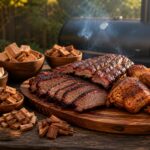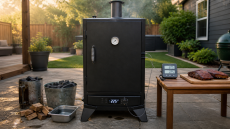
Most smoking questions eventually come down to two numbers: what temperature should the smoker hold, and when is the meat actually done? Those numbers are related, but they are not the same. A smoker can sit at 250°F while the center of a brisket is still climbing, or a chicken can look beautifully browned before it reaches a safe internal temperature.
This smoking times and temperatures chart gives you a practical starting point for brisket, pork shoulder, ribs, chicken, turkey, fish, and sausage. Use the times for planning dinner, then use a dependable thermometer and tenderness cues to decide when the food is ready. Every cut is different, and no chart can see the thickness, fat, wind, or fire in your backyard.
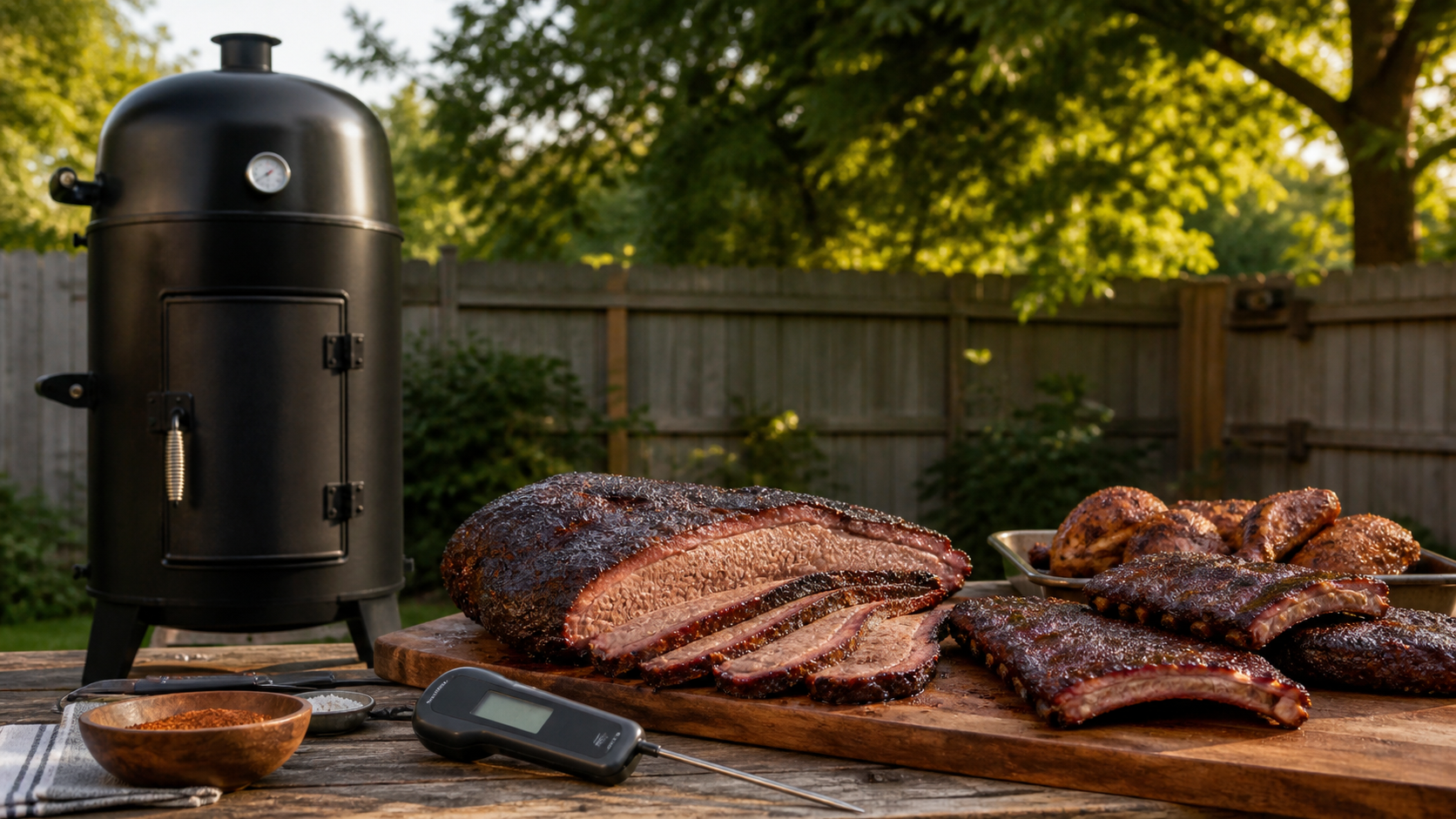
- Smoker temperature: the air temperature around the food. Most hot-smoking cooks happen between 225°F and 300°F.
- Internal food temperature: the temperature in the thickest part of the meat. This is what you check for food safety and doneness.
- Cooking time: a planning estimate only. Thickness, starting temperature, weather, airflow, fat, bone, and how often you open the door all change the result.
Smoking Times and Temperatures Chart
The table below assumes a properly preheated smoker, indirect cooking, and meat that is not frozen. The time ranges are deliberately broad. Start checking early, especially when you are cooking a small cut or using a smoker that runs hotter near one rack.
Before loading the food, let the smoker settle at its target temperature. Put an air probe at the same height as the meat, not against the wall or directly above the heat source. If your cooker has several racks, rotate food only when the recipe needs it; opening the door just to chase a small difference can cost more heat than it saves. Keep a notebook or phone note with the cut weight, smoker setting, wood, outside weather, and finish time. That small record becomes more useful than a generic chart after a few cooks on the same smoker.
| Food | Smoker temperature | Approximate time | Internal target | Doneness cue |
|---|---|---|---|---|
| Whole brisket | 225–275°F | 8–14 hours, depending on size | Probe tender, often around 195–205°F | Probe slides into the flat with little resistance; rest before slicing |
| Pork shoulder or butt | 225–275°F | 8–12 hours for a 4–8 lb cut | 195–205°F for pulling | Bone loosens and the meat separates easily |
| Baby back ribs | 225–275°F | 4–6 hours | Cook until tender; commonly 190–203°F between the bones | Rack bends when lifted and a probe enters between bones easily |
| Spare ribs | 225–275°F | 5–7 hours | Cook until tender; commonly 190–203°F | Meat has pulled back slightly and passes a bend or probe test |
| Chicken thighs | 275–325°F | 1½–3 hours | At least 165°F; many prefer 175–185°F for texture | Juices run clear and the thickest part is tender |
| Whole chicken | 275–325°F | 2½–4 hours | 165°F in the thickest breast and thigh areas | Breast is cooked through and the thigh joint feels tender |
| Turkey breast | 275–325°F | 2–4 hours, depending on size | 165°F in the thickest section | Skin is browned and the probe shows a stable safe temperature |
| Salmon fillet | 180–225°F | 1–3 hours | 145°F for food safety | Fish flakes gently and remains moist in the center |
| Fresh sausage | 225–275°F | 1½–3 hours | 160°F for ground meat; poultry sausage should reach 165°F | Center is fully cooked without a raw, soft texture |
These are not promises. A thick 12-pound brisket and a thin 5-pound brisket will not finish on the same schedule, even if both smokers display 250°F. Plan to finish early when guests are waiting: large cuts can rest in a clean, insulated cooler for a while, but an undercooked brisket cannot be rushed without changing the texture.
Safe Internal Temperatures for Smoked Meat
The USDA guidance for smoking meat and poultry says to monitor the smoker so the cooking environment stays between 225°F and 300°F during hot smoking, then check the food with a thermometer. The USDA minimums are 145°F for whole cuts of beef, pork, veal, and lamb with a three-minute rest; 160°F for ground meats; 165°F for poultry; and 145°F for fish.
Those are safety minimums, not always the final texture you want from barbecue. Pork shoulder may be safe well before it is tender enough to pull. Brisket may reach a safe temperature while the connective tissue is still chewy. That is why barbecue recipes use both a thermometer and an observable tenderness test.
Use the probe in the thickest part of the food and avoid touching bone, a grate, a pan, or a large pocket of fat. If you are cooking several pieces, check more than one. The smallest chicken thigh may be ready while the thickest one still needs time.
For more precise thermometer advice, see our digital meat thermometer guide. A leave-in probe is useful for long cooks, while an instant-read thermometer helps you check several locations near the end.
Brisket Smoking Time and Temperature
Brisket is the cut most likely to make a timing chart look unreliable. The size, thickness of the flat, amount of fat, trim, grade, and smoker airflow all matter. A typical whole brisket may take eight to fourteen hours at 225°F–275°F, but you should plan by tenderness rather than a strict hours-per-pound formula.
Trim hard, waxy fat without removing the softer fat that protects the meat. Season it well before the cook, place the thicker point toward the warmer part of the smoker, and keep the door closed while the bark develops. When the internal temperature stops rising for a while, you are seeing the stall. It is normal; the evaporating surface moisture cools the brisket.
You can wait through the stall, wrap once the bark looks right, or change the cooking temperature according to your recipe. When the flat feels probe tender in several places, remove the brisket and let it rest. Cutting immediately can spill moisture and leave the slices drier than they need to be.
Pork Shoulder Smoking Time and Temperature
Pork shoulder is one of the most forgiving first smokes. At 225°F–275°F, a four- to eight-pound shoulder often needs eight to twelve hours, but the range can be wider. A bone-in cut can take longer than a small boneless roast, and cold weather can slow the cook.
Cook until the meat is tender, often somewhere around 195°F–205°F. Do not pull it simply because the display reaches a particular number. Slide a probe into several parts of the shoulder. When it enters easily and the bone wiggles loose, move the meat to a resting pan and let it relax before pulling.
If dinner has a firm serving time, cook the shoulder early. Resting is not wasted time; it lets the juices settle and gives the connective tissue a chance to finish softening. Keep the meat covered and safely hot while it rests, rather than leaving it on the counter for hours.
Rib Smoking Time and Temperature
Baby back ribs are smaller and usually finish sooner than spare ribs. At 225°F–275°F, baby backs often take four to six hours, while spare ribs can take five to seven. The popular 3-2-1 method is a useful framework for thick spare ribs, but it is not a rule. Smaller racks can become soft and overcooked if you follow the clock without checking them.
Look for a rack that bends when lifted from one end, meat that has pulled back slightly from the bones, and a probe that passes between the bones with little resistance. Sauce near the end so the sugars do not burn during the whole cook. If the ribs are tender before guests arrive, wrap them loosely and keep them warm for a short rest.
Chicken and Turkey Smoking Time and Temperature
Poultry benefits from a warmer smoker than brisket. Running around 275°F–325°F helps the skin render and reduces the chance of rubbery skin, although a smoker may still not produce the crisp finish of a hot grill or oven. Smoke the chicken until the breast and thigh areas reach at least 165°F.
Turkey size changes the schedule dramatically. A turkey breast may take two to four hours, while a whole bird can need much longer. Do not stuff a whole turkey for a long low-temperature smoke unless you are following a tested, safe method; the center of the stuffing can heat too slowly. Use a probe in the thickest breast and inner thigh, and allow the bird to rest before carving.
If the skin is not as crisp as you want, finish the poultry at higher heat after the smoke stage. That can be a hot grill, an oven, or a smoker that is designed to reach the necessary temperature. The important point is that the center reaches a verified safe temperature before serving.
Fish and Sausage Smoking Time and Temperature
Fish cooks quickly and can dry out long before a large cut of meat is finished. Salmon often takes one to three hours at 180°F–225°F, depending on the thickness of the fillet and whether you want a soft or firmer texture. Keep the fish cold until it goes into the smoker, use mild wood, and start checking early.
Fresh sausage needs enough time for the center to cook without the casing splitting. Smoke it around 225°F–275°F and check the thickest link. Ground meat should reach 160°F; poultry sausage should reach 165°F. If you are using cured sausage, follow the product instructions because not every sausage is intended to be cooked the same way.
How Weather and Smoker Design Change Cooking Time
Two smokers set to 250°F can cook differently. A thin vertical cabinet may lose heat quickly when the wind blows. A heavy insulated cooker may recover faster after the door opens. Pellet grills cycle their auger and fan, electric smokers cycle their heating element, and charcoal smokers respond to the amount of fuel and airflow.
Cold weather, rain, wind, a long extension cord, a crowded grate, and frequent peeking can all extend the cook. Keep the smoker sheltered in a safe, open-air location, but do not bring an outdoor appliance into a garage or enclosed porch. Use a grate-level thermometer to find out what is really happening near the food.
How to Plan a Smoked Meal Backward
Start with the serving time, then work backward. A brisket that needs to be sliced at 5 p.m. should not go on at 8 a.m. if your estimate is ten hours; it also needs time to rest, and a stubborn stall can add several hours. Put the meat on earlier than the minimum estimate, then hold it safely if it finishes ahead of schedule.
Write down four checkpoints: when the smoker should be preheated, when the meat goes on, when you will first check internal temperature, and when you expect the rest to begin. For ribs and chicken, the schedule may fit into an afternoon. For brisket, pork shoulder, and turkey, an overnight or early-morning start is often more comfortable.
Plan the serving temperature and the texture together. A pork shoulder can rest while you prepare sides, but crisp poultry skin loses its texture when it sits covered for too long. Ribs can be held briefly, while fish is best served soon after it finishes. A chart gives you the outline; the food and your serving plan decide the details.
The smoker grill how-to guide covers preheating, airflow, wood, and door-opening habits. For electric cabinets, the electric smoker buying guide explains why rack position, insulation, and controller accuracy can change the result.
Common Timing Mistakes
- Use the clock to plan, but use the probe and tenderness to decide when the food is done.
- Measure at grate level and in the thickest part of the meat.
- Keep the lid closed as much as practical so the smoker can recover.
- Build a rest period into the serving time instead of slicing immediately.
Using the clock instead of the probe
Time estimates are useful for planning, but the thermometer decides when the food reaches a safe temperature. Tender cuts still need a texture check.
Measuring the wrong place
Do not let the probe touch bone, a metal rack, or the pan. Those surfaces can give you a misleading reading. Check the center and the thickest section.
Opening the smoker repeatedly
Every door opening releases heat and smoke. Use a window, remote probe, or quick inspection rather than checking every few minutes. A short temperature dip is normal; repeated dips can add a long time to the cook.
Adding too much wood
More smoke does not mean better smoke. A heavy, stale cloud can make the outside of meat bitter. Add small amounts according to your smoker manual and keep the exhaust open enough for clean airflow.
Starting too late
Large cuts often finish later than expected. Start early, hold the finished meat safely, and give yourself time for resting. Guests forgive an early dinner more easily than a raw or tough one.
Frequently Asked Questions
What temperature is best for smoking meat?
Most hot smoking takes place between 225°F and 300°F. Tough cuts such as brisket and pork shoulder are commonly cooked at 225°F–275°F, while poultry often benefits from 275°F–325°F for better skin. The best setting is the one your smoker can hold steadily and your recipe suits.
Does meat smoke faster at 300°F than at 225°F?
Usually, yes, but the difference is not perfectly predictable. A higher chamber temperature can shorten the cook, but it can also change bark, moisture loss, and the time needed for connective tissue to soften. Use the internal temperature and tenderness test rather than assuming a fixed percentage of time saved.
Should I wrap meat to make it cook faster?
Wrapping can reduce evaporative cooling and help a large cut move through the stall. It also softens the bark and changes the surface texture. Wait until the bark looks and feels right for your recipe, then use foil or butcher paper if the tradeoff suits you.
Why did my smoker reach temperature but the meat is still cold?
Cold meat absorbs heat, and the air temperature in the smoker can recover before the center of the food does. A thick cut may also have been placed near a cooler edge of the grate. Verify the probe position, keep the door closed, and allow the cook to continue based on the internal reading.
Can I smoke frozen meat?
Thaw meat safely in the refrigerator before smoking. A frozen center extends the time it spends warming and makes a timing chart even less useful. Do not use a smoker as a substitute for safe thawing.
Use a smoking times and temperatures chart to plan your cook, not to force every piece of meat onto the same schedule. Keep the smoker stable, measure the food in its thickest part, follow safe internal temperatures, and use tenderness cues for brisket, pork shoulder, and ribs. Once you record the weather, smoker setting, cut size, and finish time, your next cook becomes much easier to predict.
The most useful upgrade is usually a reliable thermometer and a little patience. Start checking early, keep the lid closed, and let the food tell you when it is ready.