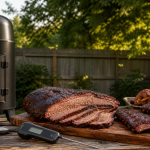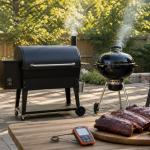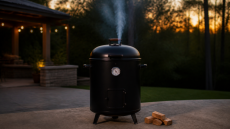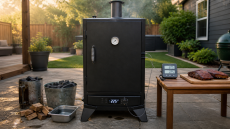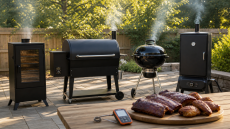
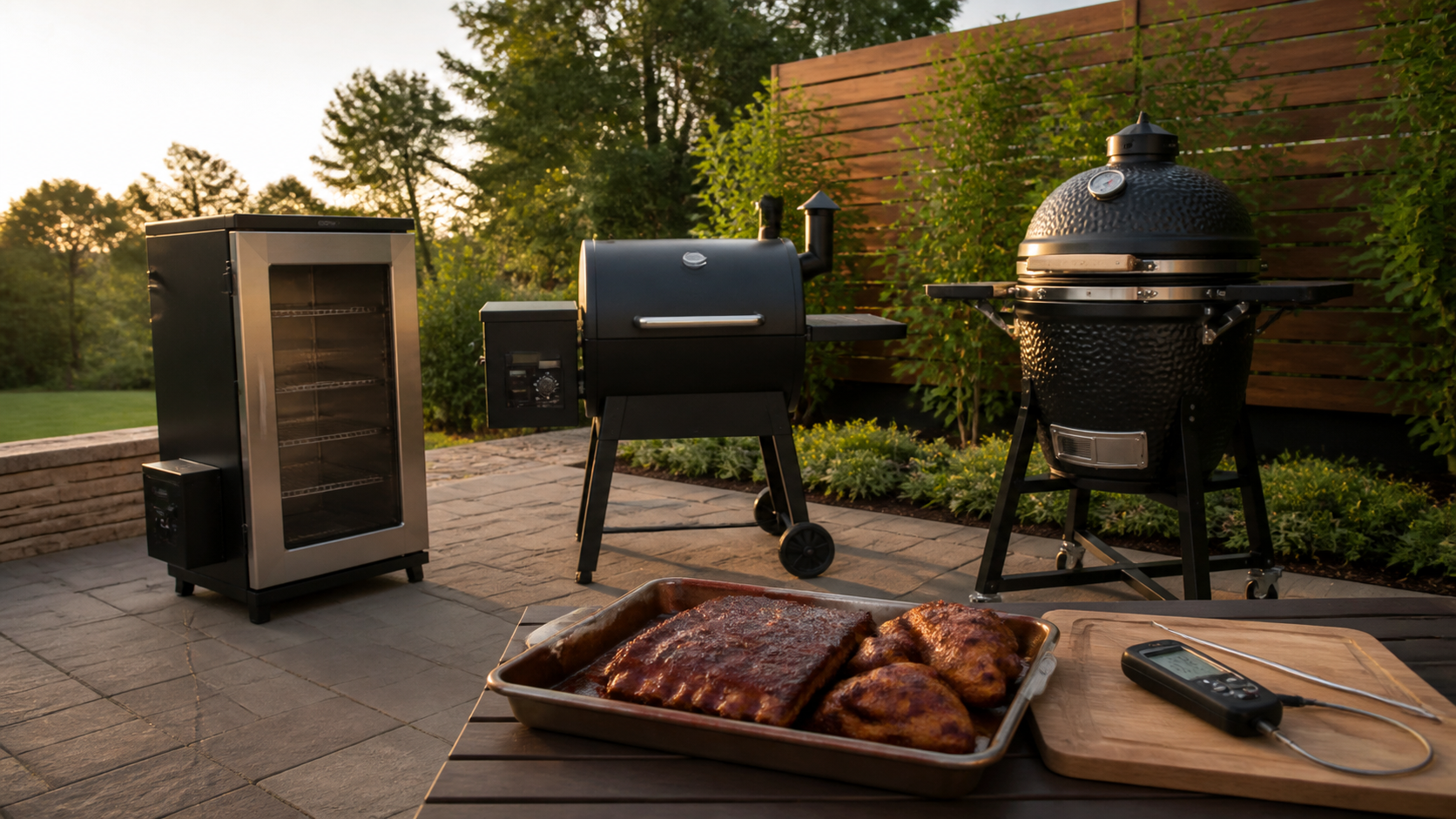
For most first-time buyers, an electric smoker is the least intimidating place to start. A pellet smoker is a better fit if you want automatic temperature control and a grill you can use for more than low-and-slow cooking. Choose a charcoal bullet smoker when you want the most hands-on fire-building practice and the lowest long-term dependence on electronics. The best first smoker is the one you will actually light on a Tuesday night—not the one with the longest feature list.
- Pick electric for the lowest fire-management effort and a compact, smoke-first cabinet.
- Pick pellet for automated wood-fired cooking plus roasting and grilling flexibility.
- Pick charcoal if learning airflow and live-fire control is part of the appeal.
- Pick propane for quick startup without a powered controller.
Best Smoker for Beginners 2027: Easy Options for Your First BBQ
Your first smoker should make the next cook easier, not turn dinner into a weekend engineering project. That sounds obvious, but buying guides often compare cooking area and maximum temperature while skipping the decisions that matter after the box arrives: How much attention will the fire need? Can you find fuel locally? What happens when the temperature moves 25 degrees? Is the cooking space big enough for the food your family actually eats?
This guide is for a beginner who wants dependable barbecue at home, on a patio or in a small backyard. It compares the four common smoker styles, explains what to look for in a first machine, and then shows which type makes sense for different cooking habits. I am basing the recommendations on published specifications, manufacturer documentation and the practical workflow each design creates. I am not presenting a test session or pretending to have cooked on every model.
One note before you shop: the title says 2027 because this is a forward-looking buying guide. Product names, prices, app features and availability can change before publication and during the season. Confirm the current specification and warranty on the manufacturer’s page before placing an order.
Our beginner picks by cooking style
| Best for | Smoker style | Why it works for a new cook | Main compromise |
|---|---|---|---|
| Simple overnight or weekday cooks | Electric | Set the temperature, add a small amount of wood and monitor the meat | Limited searing and less live-fire flavor |
| Set-and-check convenience with a wood-fired profile | Pellet | Controller and auger automate most of the heat management | Needs electricity, pellets and routine fire-pot cleaning |
| Learning real fire control | Charcoal bullet | Efficient shape, simple airflow controls and strong smoke character | Requires attention to vents, fuel and weather |
| High heat and a familiar gas setup | Propane | Quick to light, easy to adjust and useful when electricity is inconvenient | Fuel management and wind protection still matter |
If you are unsure, start with the first row and work down the list only when you can name a specific reason. “More authentic” is not a complete reason if you do not want to tend a fire. A smoker that sits unused is expensive, no matter how good its specifications look.
What makes a smoker beginner-friendly?
1. A temperature control you can understand
Beginner-friendly does not mean fully automatic. It means the controls behave predictably and the manual explains what they do. A simple thermostat, a clear digital controller or two well-marked dampers are all workable. The warning sign is a control panel that offers many modes without explaining the basic sequence: start, preheat, add food, monitor and shut down.
Every smoker still needs a separate probe at grate level. The built-in dial or controller sensor may be placed in a different part of the cabinet, and its number is not the temperature next to your brisket. Our guide to choosing a digital meat thermometer explains why a second measurement is worth the small cost.
2. Enough room for one realistic meal
Cooking area is not the same as usable capacity. A square-inch number may include several racks, but a large roast can block the rack above it. A 30-inch vertical cabinet may be ideal for chicken, ribs and a pork shoulder, while a compact bullet smoker may use two small grates more efficiently than a wide grill.
Write down the food you cook most often. If it is two racks of ribs and a tray of wings, look for multiple rack levels. If it is one brisket, measure the grate width and the lid clearance. If you host once a month, choose enough capacity for that event without making every ordinary cook waste fuel.
3. A safe, stable place to operate
Read the clearance requirements before buying. Smokers need a level, non-combustible surface, safe distance from siding and a power or gas connection that will not be stretched across a walkway. Never run a fuel-burning smoker in a garage, porch enclosure or other space where carbon monoxide can collect. Keep a dry-powder extinguisher nearby and follow the manufacturer’s warning labels.
4. Parts and instructions you can actually find
Grates, gaskets, water pans, temperature probes and grease trays eventually need cleaning or replacement. A manufacturer with manuals, diagrams and replacement parts is easier for a first-time owner than an anonymous model with a tempting price. Keep the manual in a cloud folder and write down the model number before you recycle the box.
Best electric smoker for a beginner
An electric cabinet smoker is the calmest introduction to low-and-slow cooking. You plug it into a properly rated outdoor outlet, choose a temperature, place a small amount of wood in the tray and let the heating element do the heavy lifting. There is no charcoal chimney, gas bottle or auger to learn on the first day.
A current example of the format is the Masterbuilt 30-Inch Digital Electric Smoker. The manufacturer lists a vertical cabinet and 710 square inches of cooking space on the model page. That kind of rack layout is useful for a family that wants ribs, chicken or a pork shoulder without needing a wide footprint.
What electric smokers do well
- Hold a low smoking temperature without constant vent adjustments.
- Use a modest amount of wood compared with a large live fire.
- Fit patios where a full-size offset smoker would be awkward.
- Make it easier to learn seasoning, wrapping and probe placement separately from fire management.
Where electric smokers disappoint
The heating element is not a substitute for a grill. Most electric cabinets are happiest at smoking temperatures and may not create the surface heat needed to sear a steak or crisp poultry skin. They also need a safe outdoor electrical connection, and an extension cord can be a poor choice if it is undersized, wet or routed through a door. Follow the manual’s electrical instructions exactly.
Smoke flavor can be lighter than what you get from a charcoal or offset fire. That is not automatically a defect. Many beginners prefer a clean, restrained smoke profile while they learn how wood and time change the food.
Read our electric smoker reviews before buying, and compare the rack dimensions rather than relying only on the cabinet’s advertised square inches.
Best pellet smoker for a beginner
Pellet smokers use an electric controller, an auger and compressed hardwood pellets. You select a temperature, the controller feeds pellets to the fire pot and a fan circulates heat and smoke. For a new cook who wants wood flavor with fewer manual adjustments, that is a convincing combination.
The Traeger Pro 575 is a useful example of the category. Traeger’s current product page lists 575 square inches of cooking space, an 18-pound hopper, a built-in meat probe and a maximum temperature of 500°F. Those details explain the appeal: it can smoke, roast and grill, while the controller handles much of the temperature work.
What pellet smokers do well
- Offer repeatable temperature settings for long cooks.
- Can smoke at low heat and cook hotter foods on the same cooker.
- Give a beginner an easier path to ribs, pork shoulder and chicken.
- Often include a probe port or app-based monitoring, depending on the model.
The maintenance a beginner should expect
Pellet convenience is not maintenance-free. Pellets must stay dry, the fire pot needs vacuuming on the schedule in the manual and the grease path must be kept clear. A temperature swing can be caused by a dirty fire pot, damp pellets, a lid leak, cold wind or a controller problem—not just by bad luck. Our future troubleshooting guide on pellet temperature swings will go deeper, but the habit is simple: clean first, change one variable at a time and keep a backup instant-read thermometer.
Pellet smokers also require power during the cook. If your patio outlet is unreliable or you regularly smoke during storms, an electric or charcoal design may be a better fit.
Best charcoal smoker for a beginner
Charcoal teaches the core skill behind barbecue: controlling heat with fuel and airflow. A well-designed bullet smoker is more forgiving than a large offset because the vertical shape keeps the fire close to the food and the water pan helps moderate the cooking chamber.
The Weber Smokey Mountain Cooker 18 is one established example. Weber lists two cooking grates, 481 square inches of total cooking area, adjustable dampers and a silicone temperature grommet on its product page. The page also lists a porcelain-enameled body and a 10-year warranty on the bowl, lid and center section against rust-through or burn-through. Check the live page for the current price and availability before publication.
Why a charcoal bullet can be a great first smoker
- It is mechanically simple, with no auger, fan or controller to diagnose.
- Fuel and wood are widely available in the United States.
- You can make small vent changes and see how the fire responds.
- It produces a traditional smoke profile without the footprint of a large offset.
What new charcoal owners need to accept
Temperature will move when the weather changes. Wind can pull heat through the vents; cold air can lengthen the warm-up; opening the lid can erase progress. You will need a chimney starter, heat-resistant gloves, a reliable thermometer and enough time to watch the first few cooks. That learning curve is rewarding, but it is not “set and forget.”
Use our step-by-step smoker setup guide for the first fire. Start with chicken thighs or a small pork roast instead of making your first attempt a brisket for a crowd.
Should a beginner buy a propane smoker?
Propane cabinet smokers sit between electric convenience and charcoal involvement. The burner gives you quick, adjustable heat, while wood chunks or chips provide smoke. They are attractive when you do not want a powered controller but do want a shorter startup than charcoal.
The trade-offs are easy to overlook. The burner needs a clean gas connection, the cylinder must remain outside and upright, and wind can make the flame unstable. A propane smoker should never be operated in an enclosed area. Read the manufacturer’s leak-test and shutdown instructions every season, even if the cooker feels familiar.
Choose propane when you already use a gas grill, have a safe cylinder setup and value quick heat. Choose electric instead if you want the most hands-off low-temperature cooking and have dependable outdoor power.
How much should a first smoker cost?
Set a complete-cook budget, not just a smoker budget. Add a probe thermometer, chimney starter or pellets, fuel storage, gloves, a cover and replacement water-pan liners if the design uses them. A cheap cooker that needs several accessories can cost more than a better-supported model.
Prices move with sales and seasonality, so I avoid treating a price seen today as a permanent recommendation. Instead, compare these practical tiers:
| Budget approach | What to prioritize | Who it suits |
|---|---|---|
| Entry-level | Stable body, usable thermometer port, replacement parts | One or two people learning with chicken and ribs |
| Mid-range | Better insulation, larger racks, easier cleanup and stronger warranty | Families cooking weekly |
| Premium | Controller quality, app support, heavy construction and capacity | Frequent cooks who will use the extra features |
Do not spend premium money on a feature you cannot name a use for. Wi-Fi monitoring is helpful if you work away from the patio; it is unnecessary if you are happy checking a probe at the cooker. A large hopper is useful for an overnight brisket; it is wasted capacity if you mostly cook two chicken breasts.
- Measure the smoker footprint with the door, lid and shelves open.
- Confirm the usable rack dimensions for your usual cuts of meat.
- Check the warranty, manuals and replacement-part support for the exact model.
- Add the thermometer, cover, gloves and fuel-storage cost to the buying budget.
Five mistakes first-time smoker buyers make
Buying the biggest smoker available
A large chamber consumes more fuel, takes longer to stabilize and can tempt you to cook more food than you can safely store. Measure your parking spot and normal serving size before chasing capacity.
Trusting the lid thermometer
The lid gauge is a rough reference. Place a calibrated probe near the food and learn the hot and cool zones of your particular cooker.
Choosing a fuel you cannot store
Pellets absorb moisture. Charcoal needs a dry bin. Propane cylinders need a safe outdoor location. Electric smokers need a suitable outlet. The correct fuel is the one you can keep ready without creating a safety problem.
Expecting a smoke ring to prove quality
A smoke ring is a visual effect, not a safety or tenderness test. Judge the cook by internal temperature, texture, moisture and whether the smoke tastes clean. The USDA smoking guidance is the right reference for safe handling and finished internal temperatures.
Skipping the first burn-in
New smokers can have manufacturing residue, oil or packaging odors. Follow the manual’s burn-in procedure before cooking food. If the manual gives no clear procedure, contact the manufacturer rather than inventing a high-heat cycle that could damage electronics or paint.
A simple first-month learning plan
- First cook: chicken thighs at a moderate smoking temperature. They are affordable, forgiving and easy to probe.
- Second cook: a rack of ribs. Practice keeping the chamber steady and adding wood sparingly.
- Third cook: pork shoulder. Learn how a long cook behaves, including the stall and the rest.
- Fourth cook: repeat the meal you liked best. Change only one variable, such as wood species or wrapping.
Keep a short log: outdoor temperature, smoker setting, grate temperature, fuel used, wood added and the time the meat reached its finished texture. A notebook will teach you more about your cooker than a dozen generic time charts.
Which beginner smoker should you buy?
Buy an electric smoker if the priority is easy low-temperature cooking, compact space and minimal fire management. Buy a pellet smoker if you want wood-fired flavor plus the ability to roast and grill with an automatic controller. Buy a charcoal bullet smoker if learning fire control is part of the fun and you want a simple, efficient cooker. Buy a propane smoker if quick heat and no electrical controller matter more than maximum smoke intensity.
There is no universal winner. A beginner who dislikes tending a fire will get better barbecue from an electric cabinet than from a beautiful offset that never gets lit. A cook who enjoys adjusting vents may find a charcoal bullet more satisfying than an app-controlled pellet grill. Match the smoker to your habits, available space and tolerance for maintenance.
Use this checklist before you place the order
Put the product page aside for five minutes and check the boring details. They are the details that decide whether the smoker becomes a useful appliance or an awkward object at the edge of the yard.
Measure the full footprint
Measure with the lid, door and side shelf in their open positions, not just the dimensions in the shipping box. Leave enough space to walk around the hot cooker and to remove a rack without bumping into a wall. A vertical cabinet usually wins on floor space, while a cart-style pellet grill needs more room behind the lid and around the hopper.
Check the power, gas and weather plan
Electric and pellet models need an outdoor-rated power connection. Confirm that the outlet is protected as required by local code and that the cord will not sit in a puddle. If you use a gas model, identify where the cylinder will stand and how you will shield the burner from wind without blocking ventilation. If the cooker will live outside, budget for a fitted cover and a dry place for pellets or charcoal.
Look for a real grease path
Grease should travel to a removable tray or cup that you can clean without disassembling the cooker. Ask how the tray comes out when it is full and whether disposable liners are available. Grease hidden under a heat diffuser is a cleaning chore that becomes more difficult after every cook.
Read the warranty exclusions
A long headline warranty may cover the body but not the controller, igniter, probe or paint. Read the parts list and the conditions for outdoor storage. Save the receipt and register the cooker if the manufacturer offers registration. This is especially important for electric and pellet smokers because their convenience depends on a few replaceable electronic parts.
Confirm the rack layout
Look at a manual or parts diagram, not only a staged product photo. Can the top rack be removed to fit a tall turkey? Is there a dedicated rib rack? Can you slide a pan out without lifting the food above it? These questions are more useful than a single total-area number.
How the first cook differs by smoker type
The first cook is where a new owner discovers the rhythm of the machine. Set the expectation correctly and the learning curve feels manageable.
With an electric cabinet, preheat with the water pan in place if the manual calls for it. Add a modest amount of wood and wait for the smoke to become clean before loading food. Resist the urge to refill the chip tray every few minutes; a heavy, white cloud usually tastes harsher than a thin stream that fades in and out.
With a pellet grill, use the manufacturer’s start-up and shutdown cycle. Do not turn the power strip off immediately after cooking if the controller needs to run its fan and clear the fire pot. Keep a small amount of dry pellets in the hopper during the first cook and listen for the auger and fan so you know the normal sounds.
With a charcoal bullet, light fewer briquettes than you think you need and add fuel gradually. Once the cooker is close to target temperature, make tiny vent adjustments and wait for the response. A large correction followed by another large correction creates a temperature pendulum that is hard to recover from.
With a propane cabinet, leak-test the connection, light it exactly as the manual shows and watch the flame for the first several minutes. Wind can change the burner’s behavior. If the flame goes out, turn the gas off and wait the stated amount of time before attempting a relight.
When the “easy” smoker still has a problem
The temperature is low
First check the measurement. Put the probe at grate height, away from the wall and away from the meat. Then check airflow, fuel and weather. A charcoal cooker may need a small vent change; a pellet cooker may need a clean fire pot and dry pellets; an electric model may be cycling normally because the door was opened. Avoid changing fuel, controller settings and probe location all at once.
The smoke tastes sharp
Sharp or bitter smoke is usually a sign of too much wood, restricted airflow, dirty grease or an inefficient fire. Remove excess wood, let the cooker clear and keep the next load smaller. Clean the grates and grease path before assuming that a different wood species will solve the problem.
The outside is hot or the finish is changing
Smokers are hot appliances. Keep children, pets and combustible items away, and follow the clearance in the manual. If a new cooker produces an unusual odor, visible melting or an electrical fault, shut it down and contact the manufacturer. Do not improvise a repair around a heating element, gas line or controller.
A quick decision tree
If you still cannot decide, answer these questions in order:
- Do you have a safe outdoor outlet? If not, remove electric and pellet models from the list.
- Do you want to tend a live fire? If not, choose electric or pellet.
- Do you want to grill steaks and burgers as well as smoke? Pellet usually offers the most flexible single-cooker workflow, while many electric cabinets are smoke-first appliances.
- Will the cooker be stored in a windy or cold spot? Favor a well-insulated body and plan a windbreak that does not violate clearance rules.
- Will you cook overnight? Choose a design with dependable monitoring, a clean shutdown procedure and a fuel capacity that covers the cook with a safety margin.
The decision tree is intentionally plain. It prevents a flashy feature from outranking a basic requirement such as a safe place to operate or a fuel source you can buy locally.
Start with the simplest smoker that solves your actual problem. Verify the current model specifications, safety clearances, warranty and availability before buying. Then choose one forgiving first cook, use a separate meat probe and keep notes. Consistency comes from a repeatable process—not from a badge, a giant cooking-area number or a promise that you will never need to check the fire.
Beginner smoker FAQ
Is an electric smoker good for a first-time user?
Yes. It separates temperature control from fire-building, which lets you focus on seasoning, smoke quantity and doneness. It is less versatile at high heat, so choose it when smoking is the main job.
What is the easiest meat to smoke first?
Chicken thighs are a practical first choice because they are inexpensive and less likely to dry out than chicken breast. Pork shoulder is a good second project because it gives you a longer cook without requiring the precision of a brisket.
Do I need a water pan?
Use one if your smoker’s design calls for it or if it helps moderate temperature. A water pan cannot rescue an overfilled fire or replace a lid seal. Keep it clean and follow the manufacturer’s instructions.
Should I buy a smoker with Wi-Fi?
Only if remote monitoring will change how you cook. Wi-Fi can show temperature trends, but it cannot correct a blocked auger, a dying fire or a badly placed probe. Treat the app as a convenience, not a safety system.
How often will I need to clean a smoker?
Brush loose residue after cooks, empty grease safely and follow the manual for deeper cleaning. Pellet smokers need special attention around the fire pot. A clean cooker is easier to diagnose and less likely to produce bitter smoke.