A flank steak smoked recipe succeeds or fails at the cutting board. Flank is a long, flat muscle with obvious fibers; even a correctly cooked steak becomes chewy when sliced with those fibers instead of across them.
The cooking plan is thickness-first: a thin end may finish much earlier than the center, and the final sear can add temperature quickly. This guide uses one continuous smoke-to-sear process and USDA’s whole-beef endpoint of 145°F before removal plus at least a 3-minute rest.
Quick answer: Mark the raw grain direction, measure the thickest and thinnest sections, and marinate under refrigeration if desired. Smoke at 225°F, move directly to a fully heated searing surface, and verify the coldest center reaches 145°F. Rest at least 3 minutes, then cut the steak into manageable sections and slice each one thinly across its grain.
Thickness Timing Table
| Thickest section | 225°F smoke planning range | Begin checking | Sear control |
|---|---|---|---|
| ½–¾ inch | 20–35 minutes | At 15 minutes | Very short contacts; remove thin tail early |
| ¾–1 inch | 30–45 minutes | At 25 minutes | About 60 seconds per face, then check |
| 1–1¼ inches | 40–60 minutes | At 35 minutes | Turn both faces and edges; check often |
| Over 1¼ inches | 50–75 minutes | At 40 minutes | Verify several points before removal |
These are planning ranges, not removal times. Starting temperature, marinade, actual grate heat, wind, steak shape, and the searing surface change the finish. Use the clock to begin checking and the thermometer to verify 145°F.
Flank steak often has a thin tapered end. Do not average its thickness with the center. Shield the tail, fold it temporarily with a loose tie, or cut it away as a separate portion so the center can finish without drying the edge.
When cooking two flank steaks, treat them as separate pieces even if their package weights match. Measure each center, give each its own probe checks, and rotate grate positions only when a known hot spot requires it. One steak can have a broader thin tail or begin colder after marinating. Move each to the searing surface and remove it independently. Batch synchronization is less important than preserving the narrow sections and verifying the coldest point of both steaks.
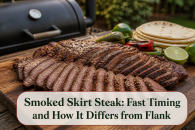
Flank Steak vs. Skirt Steak
| Feature | Flank steak | Skirt steak |
|---|---|---|
| Shape | Wide, flat oval or rectangle | Long, narrow strip |
| Grain | Broad parallel fibers easy to see | Coarser fibers across a narrow strip |
| Thickness | Usually thicker in center | Usually thinner overall |
| Smoke window | Short but workable | Very short; often better hot-grilled |
Do not apply flank timing to skirt steak. Skirt’s thin profile can reach its endpoint during the time a smoker recovers from opening. If the package label is missing, ask the butcher rather than guessing from a folded shape.
Mark the Grain Before Cooking
Place the raw flank steak with its long axis horizontal and look for the visible muscle lines. Lay two toothpicks at one edge parallel to the grain, take a phone photo, or cut a tiny orientation notch in a corner. Remove toothpicks before cooking.
The crust and cooked surface can hide those lines later. Marking them now means you will know which direction to cut even after marinade, smoke, and searing change the exterior.
Across the grain means the knife crosses the long fibers at roughly a right angle. The goal is short fibers in each bite, not slices that merely look diagonal on the board.
Marinade or Dry Rub?
Refrigerated marinade
A marinade seasons the surface and can add acid, salt, aromatics, and oil. Combine red wine or citrus, neutral oil, soy or Worcestershire sauce, garlic, and pepper. Marinate in the refrigerator for 2 to 8 hours in a food-safe container.
Discard used marinade or boil it according to safe food-handling guidance before any sauce use. The simpler choice is to reserve a clean portion before raw meat enters the container.
Dry seasoning
For a stronger crust, salt at about 0.75% of trimmed meat weight 4 to 12 hours ahead and refrigerate uncovered. Add black pepper, granulated garlic, and mild paprika shortly before smoking.
Neither marinade nor dry brine changes the required final temperature. Acid does not sterilize the steak.
Set Up Smoke and Sear Together
Stabilize the smoker at 225°F. Oak, pecan, cherry, hickory, or a mild blend suits beef. Flank has a large exposed surface and short cook, so use clean moderate smoke. The wood pairing guide compares species and dose.
Preheat a separate direct grill zone, plancha, or cast-iron surface before the steak approaches its finish. A pellet grill may take time to climb from 225°F to high heat; prepare another safe searing surface if needed.
Keep a clean finished-meat tray, long tongs, and a fast instant-read thermometer ready. Do not return cooked steak to the marinade dish or raw-meat board.
Step-by-Step Smoked Flank Steak
1. Dry the exterior
Remove the steak from marinade, let excess drip away, and blot the surface. Wet marinade inhibits browning and can scorch when it contains sugar. Keep the meat refrigerated until the smoker is stable.
2. Place the probe correctly
Insert a probe horizontally from the side into the thick center. Avoid passing through into the grate. A wide flank may have two thick areas, so plan to verify both with an instant-read thermometer.
Our digital thermometer guide explains sensor position and why thin steaks benefit from side entry.
3. Smoke by thickness
Place the thick end toward the warmer section and the tapered end toward the cooler side. Close the lid and begin checking at the table’s time. Rotate only if the cooker has a known hot spot.
4. Move directly to the sear
Transfer the steak to the fully heated surface without a long pause. Sear the first broad face, turn, then brown the second. Check temperature after short contacts; flank’s flat profile can climb quickly.
Continue until the coldest valid center reaches at least 145°F. If the thin tail reaches the endpoint early, separate and remove it to the clean tray while the center continues.
5. Rest at least 3 minutes
Rest on a clean board for a minimum of 3 minutes. Five to 10 minutes is practical for easier slicing. Do not wrap tightly in a way that steams the crust.
Carving Map: Section, Rotate, Slice
- Return to the photo or orientation mark made before cooking.
- Cut the long steak crosswise into two or three shorter blocks.
- Rotate each block so its visible fibers run left to right.
- Slice downward across those fibers into ⅛- to ¼-inch pieces.
- Hold the knife at a slight bias only if it still crosses the grain.
Cutting the steak into blocks first makes the grain easier to track and creates slices that fit a plate or tortilla. A long decorative slice running with the muscle is harder to chew.
This carving logic differs from smoked picanha, where steaks may be cut with the grain before cooking so final bites can cross it. With a whole flank, the finished carving itself must cross the grain.
Food-Safety Boundaries
USDA’s minimum for whole beef steaks is 145°F before removal followed by at least a 3-minute rest. Some flank recipes cite lower preference temperatures. PickASmoker retains the federal endpoint as the final-removal boundary.
Smoke and sear must be continuous. Do not smoke the flank partially, refrigerate it, and sear it hours later. If dinner is delayed before cooking, keep the raw steak and marinade refrigerated.
Color is not a safety test. Marinade and smoke can change exterior and interior appearance. Use the safe ranges in our smoking temperature chart when coordinating other foods.
Troubleshooting
The steak is chewy
Check slice direction and thickness first. Cut thinner across the grain. The steak may also have been mislabeled skirt or another round cut.
The tail is dry
Protect it from the hot zone, remove it earlier, or divide the steak before cooking. Do not wait for the thick center while forcing the thin end to stay on heat.
The crust is weak
Blot marinade, preheat the searing surface fully, and avoid crowding. If the center is already 145°F, stop cooking and improve the surface setup next time.
The marinade burned
It contained excess sugar or remained wet on the surface. Blot more thoroughly and reserve sweet glaze for the end, away from direct high heat.
The smoke is bitter
Reduce wood quantity and correct poor airflow. A large flat surface collects harsh smoke quickly.
Serving and Storage
Serve thin flank slices with chimichurri, grilled vegetables, rice, salads, tacos, or sandwiches. For a thicker individual steak experience, use the smoked New York strip method instead.
Refrigerate leftovers in shallow covered containers within 2 hours. Store larger sections unsliced when possible, then cut across the grain after gentle reheating or use cold in a salad.
Sources
- USDA FSIS: Safe Minimum Internal Temperature Chart
- USDA FSIS: Food Thermometers
- Traeger: How to Cook Beef Flank Steak
Mark the grain before it disappears, manage the thin tail, and keep smoke and sear continuous. The final thin cross-grain slices are what make flank steak eat tenderly.