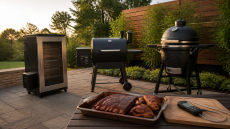
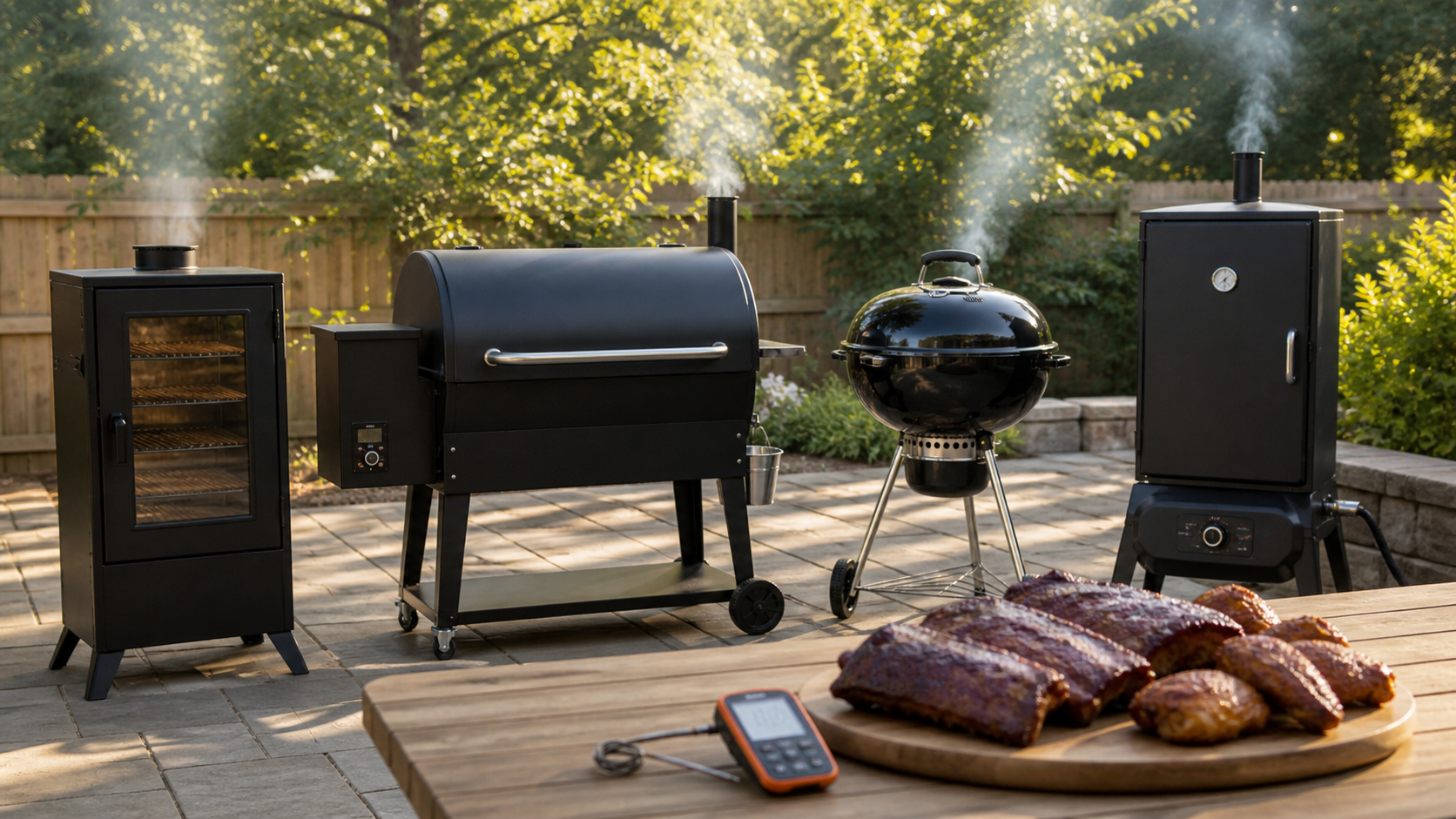
Choose electric when low-and-slow simplicity matters most, pellet when you want automated wood-fired cooking, charcoal when fire control is part of the fun, and propane when quick heat without a powered controller is the priority. Each can make excellent barbecue. The right choice depends on your time, space, fuel access and willingness to maintain the cooker.
- Lowest learning curve: electric cabinet.
- Most automated versatility: pellet cooker.
- Most hands-on fire control: charcoal smoker.
- Fast heat without electronics: propane cabinet.
Electric vs. Pellet vs. Charcoal vs. Gas Smoker: Which Is Right for You?
“Which smoker is best?” sounds like a product question, but it is really a routine question. Do you want to check a fire every 30 minutes or check a probe from the kitchen? Do you have a safe outdoor outlet? Will a bag of pellets stay dry? Does the idea of adjusting vents make you curious or tired?
The four common backyard smoker styles all move heat and smoke around meat, but they create very different work. An electric cabinet uses a heating element. A pellet cooker feeds compressed hardwood into a small fire. A charcoal smoker relies on glowing fuel and airflow. A propane cabinet uses a gas burner under a wood tray. None is automatically more “authentic,” and none removes the need for safe food handling or a reliable thermometer.
This comparison focuses on the practical differences a new owner notices after the first month: startup, temperature control, smoke character, versatility, maintenance, weather performance and running cost. Use the current manufacturer manuals to confirm specifications before you buy, and see our digital thermometer guide for the one accessory every style needs.
At-a-glance comparison
| Factor | Electric | Pellet | Charcoal | Propane |
|---|---|---|---|---|
| Startup | Fast and simple | Automatic after ignition | Longest; chimney and warm-up | Fast once connected |
| Temperature work | Thermostat cycles element | Controller feeds pellets | Vents and fuel are manual | Burner knob and airflow |
| Smoke profile | Light to moderate | Steady wood smoke | Strongest live-fire character | Moderate; wood tray matters |
| High-heat versatility | Usually limited | Often good, model dependent | Good with the right setup | Moderate to good |
| Power needed | Yes | Yes | No | No, unless the model adds electronics |
| Typical learning curve | Low | Low to moderate | Moderate to high | Low to moderate |
These are broad tendencies, not promises. Insulation, controller quality, grate design and weather can move a cooker from one column toward another. Always read the manual for the exact model.
Electric smokers: easiest temperature management
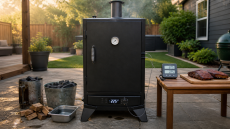
Electric smokers are vertical cabinets with a heating element controlled by a thermostat or digital panel. They are attractive to apartment or patio cooks who want to smoke ribs, poultry and fish without storing a large fuel supply. You set a low temperature, add wood according to the manual and let the element cycle.
Advantages
- Simple startup and a small learning curve.
- Consistent low heat for long cooks.
- Compact footprint in many cabinet designs.
- Little ash and no propane cylinder to refill.
Limitations
An electric cabinet is primarily a smoker, not a searing grill. Some models struggle to crisp poultry skin because their heat is gentle and humid. Cold wind can extend recovery time after opening the door, and a weak or overloaded outdoor circuit can create a safety risk. Use the outlet, cord and weather protection specified by the manufacturer.
Smoke can also be subtler. That suits fish, poultry and lightly smoked vegetables, but a cook who wants a heavy wood-fire character may prefer charcoal or pellets. Do not compensate by packing the tray with wood; excess smoldering wood creates bitter flavor and dirty residue.
Best fit
Choose electric when you smoke once or twice a month, have a dependable outdoor outlet and value predictable low heat over grilling versatility. Our electric smoker review guide covers cabinet sizes and the features that matter most.
Pellet smokers: automation with wood-fired flavor
Pellet smokers combine a small electric motor, auger, fan and fire pot. Hardwood pellets feed from a hopper and a controller adjusts the feed rate. Many are shaped like a grill, so the same cooker can smoke, roast and cook at higher heat.
Advantages
- Temperature changes are easier than on a live charcoal fire.
- Many models can grill, roast and bake as well as smoke.
- Hopper capacity can cover a long cook without repeated fuel additions.
- Some controllers offer a food probe or phone monitoring.
Limitations
Pellet convenience comes with more parts. The fire pot, auger tube and controller need clean, dry conditions. Damp pellets can swell and jam the feed system. A power outage stops the fan and auger, so an overnight cook needs a plan for monitoring and safe recovery. Pellet grills also produce a different smoke profile from a stick-burning offset; it is usually clean and steady rather than intensely smoky.
Maintenance is straightforward when it is scheduled. Vacuum ash as directed, scrape the grease path, inspect the temperature probe and store pellets in a sealed container. If the temperature swings, check cleanliness and fuel before changing controller settings.
Best fit
Choose pellet when you want a single cooker that can smoke on Saturday and grill burgers on Sunday. It is also a strong option for a busy cook who wants to spend more time preparing food than managing vents.
Charcoal smokers: the most hands-on control
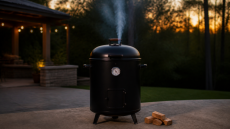
Charcoal smokers burn briquettes or lump charcoal in a basket or bowl. Air enters through lower vents, heats the chamber and exits through the top vent. Wood chunks placed near the fuel create smoke. A vertical bullet smoker uses this basic system efficiently; an offset smoker separates the firebox from the cooking chamber and requires more attention.
Advantages
- No electrical connection or auger system is required.
- Small vent changes let you shape the fire and smoke.
- Charcoal and wood offer a familiar barbecue flavor.
- Many bullet designs are compact and fuel efficient.
Limitations
Charcoal is the least automatic option in this comparison. The first few cooks require attention to the fire, the weather and the relationship between vents and temperature. Opening the lid costs heat. Adding too much fuel can overshoot the target, while choking the fire too far can create stale, heavy smoke.
Lump charcoal lights quickly and responds to air changes, but its pieces vary in size. Briquettes burn more uniformly, which many beginners find easier to repeat. Whichever fuel you choose, keep it dry and use a thermometer at grate level.
Best fit
Choose charcoal when you enjoy learning a process and want smoke character without relying on a controller. Read our charcoal smoker reviews and start with a compact bullet before moving to a large offset.
Propane smokers: quick heat without electronics
Propane smokers use a burner beneath a water pan or wood tray. Turning the control knob changes the heat, while vents regulate oxygen and exhaust. They heat faster than charcoal and can operate during a power outage, but the cylinder, hose and burner need the same care as an outdoor gas grill.
Advantages
- Fast ignition and straightforward temperature adjustments.
- No ash cleanup and no electrical controller dependency.
- Useful for cooks who already keep propane on hand.
- Often available in narrow vertical cabinets.
Limitations
Wind can disturb the flame and cold weather can reduce recovery. You must leak-test the connection, keep the cylinder outside and follow the relight instructions. Propane does not provide smoke by itself, so the wood tray and airflow have a major effect on flavor. A burner that is dirty or starved of air can burn poorly.
Best fit
Choose propane when quick startup, no ash and no electrical cord matter more than remote monitoring. It is a sensible middle ground for a cook who wants manual control without building a charcoal fire.
Flavor: what actually changes between fuels?
People often ask which fuel produces the strongest smoke. In practice, smoke quality matters more than smoke volume. Clean, thin smoke from a small amount of properly burning wood is usually more pleasant than a thick cloud from a smoldering pile.
Charcoal can add a noticeable roasted flavor because the fuel burns directly in the cooker. Pellet smoke is steady and generally mild to medium, depending on the pellet blend and cooking temperature. Electric and propane units create smoke through a dedicated tray, so the amount of wood and the airflow decide the result. Meat, rub, moisture and cook length also change what you taste.
If your food tastes bitter, do not immediately buy a stronger wood. Reduce the wood load, improve airflow, clean old grease and check that the fire is burning efficiently. Once the cooker is producing clean smoke, use the wood recommendations in our electric smoker guide as a starting point for milder cooks.
Temperature control and weather
Every smoker loses heat when the door opens and every smoker responds to wind. The difference is how quickly you can correct the change. Electric and pellet controllers make small corrections automatically, while charcoal and propane require the cook to respond.
On a cold day, allow extra preheat time and avoid placing the cooker where wind blows directly into the lower vents. Do not wrap a smoker in a blanket or cover vents with foil. If you need a windbreak, build it at a safe distance and keep clearances in the manual. The setup and safety reminders in our smoker-use guide are useful in every season.
Maintenance and long-term ownership
| Task | Electric | Pellet | Charcoal | Propane |
|---|---|---|---|---|
| After each cook | Brush grates, empty grease | Brush grates, empty grease, inspect fire area | Remove ash after it is fully cool | Brush grates, empty grease |
| Seasonal check | Cord, element, probe | Auger, fan, fire pot, probe | Vents, seals, rust, ash buildup | Hose, regulator, burner and leak test |
| Storage priority | Dry cover and protected outlet | Dry pellets and covered controller | Dry charcoal and rust protection | Dry cabinet and cylinder safety |
Cleaning is not just cosmetic. Grease and ash change airflow, create unwanted smoke and can become a fire hazard. Keep the cooking chamber clear enough that you can see the grates and inspect the parts that heat the food.
Which smoker costs the least to run?
Fuel prices vary by location, and electricity rates differ by season, so a universal cost ranking would be misleading. Electric uses the least fuel volume but depends on an outlet. Pellet purchases are convenient but can cost more than charcoal per cook. Charcoal is inexpensive per bag but may use more fuel during a long or windy cook. Propane is efficient when the burner is protected from wind, but cylinder refills are a separate expense.
Track three cooks before drawing a conclusion: starting fuel, fuel left, cook hours and outdoor temperature. Include accessories and maintenance in the budget. The cheapest bag of fuel is not a bargain if damp storage causes a failed cook.
Match the smoker to the food you cook most
Fuel type matters, but the shape of the cooker matters just as much. A vertical cabinet gives you shelves for chicken, ribs and sausage. A wide pellet grill makes it easier to lay a brisket flat and to move food between a hot and cool zone. A charcoal bullet is efficient for stacked racks but less convenient for a tall turkey. A propane cabinet is useful when you want a narrow footprint and quick heat.
| If you cook mostly… | Start by comparing… | Why |
|---|---|---|
| Ribs, wings and sausage | Rack spacing and multiple levels | Vertical capacity can be more useful than a large single grate |
| Brisket and pork shoulder | Grate width, lid clearance and probe access | Large cuts need a flat, unobstructed cooking surface |
| Fish and vegetables | Low-temperature stability and easy cleanup | Delicate food benefits from clean smoke and gentle heat |
| Steaks as well as barbecue | Maximum heat and direct-grill access | A smoke-first cabinet may leave you needing a second grill |
Think about serving time too. If you routinely cook for a large group, a cooker that holds two briskets is not automatically better if it takes twice as long to preheat and clean. A smaller cooker plus a repeatable schedule often produces a better meal than an oversized cooker used at half capacity.
Accessories that improve every smoker
Set aside part of the budget for a few unglamorous tools. A dual-probe thermometer lets you see the grate and meat temperatures at the same time. Heat-resistant gloves protect your hands when a rack or water pan is full. A drip pan and sturdy sheet tray make it safer to carry raw or finished meat. For charcoal, add a chimney starter and a metal ash tool. For pellets, add a sealed storage bin and the correct vacuum for cool ash.
Skip gadgets that make the basic process harder to understand. A phone app cannot tell you whether a probe is touching bone. A decorative smoke generator cannot correct a blocked exhaust. Learn the cooker’s normal behavior first, then add accessories that remove a real annoyance.
- Buy a reliable grate-level and meat-temperature probe before adding smart features.
- Choose dry, accessible fuel that you can store safely.
- Plan a cleaning routine for ash, grease, fire pots or burners.
- Keep the manufacturer’s manual and model number available for troubleshooting.
What to do if you change your mind later
Many cooks eventually own more than one cooker. That does not mean the first choice was wrong. An electric cabinet can remain useful for fish and small weeknight cooks after you add a charcoal grill. A pellet unit can handle routine pork shoulder while a kettle provides high-heat searing. Start with the smoker that solves today’s problem and leave room in the budget for fuel, food and practice.
If you sell or give away a cooker, include the manual, model number and any special accessories. A clear handoff helps the next owner operate it safely and makes it easier to find replacement parts.
Before checkout, open the current product page on a second device and confirm the included racks, probe, stand, cover and warranty. Retailer photos often show accessories that are sold separately. That thirty-second check prevents a surprisingly expensive first cook.
Safety applies to all four types
Operate every smoker outdoors, away from combustible walls and overhead materials. Keep raw and cooked food separate, wash hands and utensils, and verify the finished internal temperature with a probe. The USDA smoking guidance is a better safety reference than a social-media time estimate.
Use heat-resistant gloves, keep children and pets away and let charcoal ash cool completely before disposal. For electric and pellet cookers, inspect cords and plugs. For propane, shut the cylinder off after cooking and never troubleshoot a gas leak with a flame.
Final recommendation
There is no single winner between electric, pellet, charcoal and propane. An electric smoker is the easiest way to learn low-and-slow cooking. A pellet smoker offers the broadest set-and-check workflow. A charcoal smoker gives the deepest fire-control lesson and a classic live-fire character. A propane smoker starts quickly and avoids both ash and electronics.
Pick the fuel that fits your yard and your week. Then repeat a forgiving recipe until the process feels ordinary. When the cooker, thermometer and schedule work together, the differences between fuel types become creative choices rather than obstacles.
Buy for your real routine: available fuel, safe space, desired flavor and the amount of attention you can give a cook. Confirm current specs, warranties and pricing on the manufacturer’s page, then keep a simple temperature log. Consistent barbecue comes from a repeatable setup more than from a particular fuel label.
Frequently asked questions
Which smoker gives the strongest smoke flavor?
Charcoal often provides the most noticeable live-fire character, but clean smoke matters more than smoke volume. Pellet, electric and propane smokers can all produce flavorful food when wood and airflow are managed correctly.
Is pellet easier than electric?
Pellet is usually more versatile, while electric is usually simpler. If you want to grill and roast as well as smoke, pellet may be worth the extra cleaning and power dependence.
Can I use an electric smoker in winter?
Yes, if the manual allows outdoor operation in those conditions and the electrical connection stays dry and safe. Expect longer recovery in cold wind and never add an improvised insulation wrap.
Do charcoal smokers need a water pan?
Many vertical charcoal designs use one to moderate heat and catch drips. Follow the cooker’s instructions and keep the pan clean; it cannot replace proper vent control.