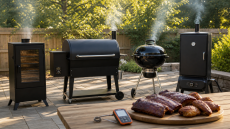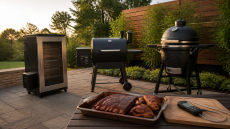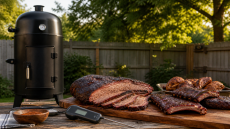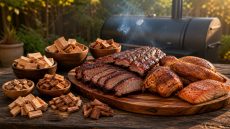

Thin blue smoke is a practical description of a clean, light smoke stream—not a promise that every cook will look exactly blue. It usually means the fire has enough heat and airflow to burn wood cleanly. Aim for a mild smoke smell and a light stream, not a thick white cloud that hangs around the cooker.
- Build a small, hot-enough fire instead of smothering a large one.
- Use dry, food-grade wood and give the smoke a clear exhaust path.
- Add wood gradually; more smoke is not automatically more flavor.
- Watch the food temperature as well as the smoke appearance.
Thin Blue Smoke Explained: How to Produce Clean BBQ Smoke
“Thin blue smoke” is barbecue shorthand for the clean, light smoke many cooks want during a low-and-slow session. It is usually easier to see as a faint blue-gray shimmer than as a dramatic plume. Sometimes the smoke is nearly invisible, especially in bright daylight. The useful clues are the smell, the fire’s behavior and the absence of heavy, bitter smoke.
Clean smoke does not come from a secret wood species or a special trick. It comes from the relationship between heat, oxygen, fuel and exhaust. A fire that is too cool or starved of air tends to smolder and produce dense white smoke. A fire that is burning too aggressively can waste fuel and push the cooker above the target temperature. The aim is a small, stable fire that burns wood gradually.
Thin blue smoke versus thick white smoke
Smoke color is not a laboratory measurement, and weather changes what you can see. Still, the difference is useful. Thick white smoke often carries water vapor, unburned particles and creosote-forming compounds from wood that is smoldering rather than burning cleanly. It can taste harsh, especially when it continues for hours.
Light smoke generally disperses quickly. You may notice a clean wood aroma without seeing much smoke at all. The food should not taste like an ashtray or leave a bitter coating on the tongue. If the smoke smells sharp, chemical or acrid, solve the fire and airflow problem instead of adding more wood.
Weather changes what smoke looks like
Cool, humid air can make a clean smoke stream look whiter than it does on a dry afternoon. Bright sunlight can make a thin stream almost disappear. Use the smell and the fire’s stability as additional clues. A cooker that holds its range, burns dry fuel steadily and vents freely is usually a better sign than a perfectly blue-looking plume in one photograph.
Why a clean fire needs oxygen
Combustion needs heat and oxygen. Closing every vent may look like a way to hold the temperature down, but it can leave the fire smoldering. Charcoal smokers need a controlled intake and a functioning exhaust. Offset smokers need a fire that is small enough to manage while still receiving airflow through the firebox and cooking chamber.
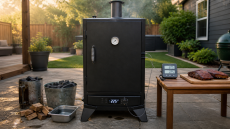
Keep the exhaust path open according to the manufacturer’s instructions. A chimney cap, grease buildup or a misplaced water pan can restrict flow. Pellet smokers rely on a fan and controller; a dirty burn pot or blocked intake can create heavy smoke. Electric and propane smokers use a tray or smoke box, but they still need the cabinet’s vents to work as designed.
Start with dry, suitable wood
Use clean, dry, food-grade hardwood. Avoid painted, treated, glued or unknown scrap wood. Wood that is visibly wet may hiss and create steam before it produces useful smoke. Very dry chips can burn quickly, while chunks or pellets may provide a steadier supply depending on the cooker.
Match the amount of wood to the size of the smoker and the food. A small vertical cabinet may need only a modest handful of chips at a time. A large offset smoker may use chunks in a small live fire. Start with less than you think you need; you can add another piece after the first burns cleanly, but you cannot remove smoke that has already settled on the food.
How to produce clean smoke in a charcoal smoker
Light a small number of coals and let them become fully lit before adding them to the fire basket. Arrange unlit charcoal so the fire can spread gradually, then add a small wood chunk where it will heat and ignite without blocking airflow. Avoid covering a large bed of glowing coals with several cold chunks at once.
Adjust the intake vents to control the fire and keep the exhaust open. When the smoke becomes thick after adding wood, give the piece time to ignite. If it continues smoldering, check whether the fire is too cool or the wood is too large. A smaller split or chunk often works better than closing vents further.
How to produce clean smoke in an offset smoker
An offset smoker works best with a clean-burning fire rather than a large pile of charcoal and wood. Use a small coal bed to ignite thin splits or chunks. Leave room around the fire for air to move, and watch the smoke coming from the stack. Keep the firebox door and intake arrangement consistent so you can learn how the cooker responds.
Do not chase a specific smoke color by opening every door. The cooking chamber needs time to recover, and a sudden rush of air can raise the temperature. If the smoke is heavy, improve the fire first: use a smaller piece of dry wood, increase airflow as the manual allows, and wait until the smoke becomes lighter before adding food.
How electric smokers make smoke
Electric smokers use a heating element and a tray or box for wood chips. Follow the manual for chip quantity and loading frequency. Some units produce heavy smoke when the tray is packed too full, while others need a small amount to maintain a light stream. Keep the door closed and let the element cycle rather than adding wood every time the smoke disappears.
A light smoke output can be enough. Electric smokers are often efficient at holding low heat, but the smoke character may be gentler than a live-fire cooker. If you want more flavor, use a compatible wood product or a manufacturer-approved accessory rather than placing loose wood directly on the heating element.
How pellet smokers control smoke
Pellet smokers meter compressed hardwood through an auger. At lower settings, the controller may feed pellets in pulses that create more visible smoke, while higher settings can burn cleaner with less visible smoke. The exact behavior depends on the controller, the weather and the model’s design.
Use dry cooking pellets and keep the hopper protected from rain. If the fire pot is full of ash, the fan intake is blocked or the temperature probe is dirty, smoke quality can suffer. Complete the normal shutdown cycle after cooking so the fan can clear the fire pot.
Smoke wood choices and intensity
| Wood style | Typical character | Good starting uses |
|---|---|---|
| Mild fruit woods | Light, sweet and forgiving | Chicken, pork, fish and vegetables |
| Medium hardwoods | Balanced, rounded smoke | Ribs, pork shoulder and turkey |
| Strong woods | Deep, assertive flavor | Beef cuts when used in moderation |
| Pellets or chips | Fast, controlled smoke delivery | Electric and pellet systems that approve them |
These are broad flavor tendencies, not strict rules. The amount of wood, the cooker’s airflow and the length of the cook matter as much as the species. When in doubt, choose a milder wood and keep the first load small.
What to do when smoke is too heavy
Do not add more wood. Check the exhaust, fire temperature and wood size. In a charcoal or offset cooker, open airflow only as far as the manual and safe temperature allow. In a pellet cooker, inspect the burn pot and fan path. In an electric unit, remove excess chips only after the cooker is safe to open and handle.
Let the smoke clear before judging the food. If a large amount of heavy smoke has already reached the meat, you may need to finish the cook with cleaner heat. The goal is not to hide a bitter flavor with sauce or another layer of smoke.
Do not soak wood by default
Soaking chips is often suggested as a way to extend their burn, but wet wood can spend its first minutes steaming and smoldering. Follow the manual for your smoker and wood product. If a tray is designed for dry chips, use them dry and control the amount rather than adding water to an improvised foil packet.
Clean smoke and food safety
Clean smoke does not make unsafe food safe. Use a separate food thermometer, keep raw meat cold before cooking, and follow the USDA FSIS smoking guidance for smoker temperatures, safe internal temperatures and storage. Smoke appearance is a quality clue, not a doneness test.
- Keep the smoker air temperature in the recipe’s recommended range.
- Measure the thickest part of the food with a clean probe.
- Do not open the lid repeatedly to inspect smoke.
- Let cooked food rest and refrigerate leftovers promptly.
A simple clean-smoke routine
Preheat the cooker, confirm the grate temperature, and let the initial startup smoke clear. Add a small amount of dry wood and watch how it burns for the first 10 to 15 minutes. If the smoke is thick, correct airflow or reduce the wood before adding food. Once the smoke is light and the cooker is stable, load the food and resist the temptation to keep changing the setup.
For temperature control, read our 225°F smoker temperature guide. For a broader setup routine, use our smoker grill guide. Both are more useful when paired with a grate-level probe and the manual for your exact model.
Thin blue smoke is a sign of a small, well-ventilated fire—not a target color you must force. Use dry wood, keep the exhaust clear, add fuel gradually and judge smoke by its smell and the food’s flavor. When smoke is thick and bitter, fix the fire instead of adding more wood.