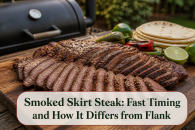
Picanha can be smoked as one triangular roast or cut into thick steaks before cooking. Both methods work, but they require different trimming, probe placement, searing, and slicing decisions. Choosing the format after the meat is already seasoned usually creates uneven pieces and an over-trimmed fat cap.
This guide keeps the characteristic fat cap, reduces only hard excess fat, and uses a continuous smoke-to-sear workflow. Whether you cook the roast whole or as steaks, the coldest tested point must reach at least 145°F before the meat leaves its final heat source, followed by a rest of at least 3 minutes.
Quick answer: Cook picanha whole when you want even slices and simpler probe placement. Cut it into thick steaks when you want more crust and individual portions. Smoke at 225–250°F, move directly to a fully heated searing surface, brown the fat cap and meat, and verify every cold point at 145°F or higher.
Whole Roast vs. Steaks: Choose First
| Decision | Whole picanha | Picanha steaks |
|---|---|---|
| Best for | Uniform slices and a centerpiece | Maximum crust and individual portions |
| Prep | Trim edges; score fat; keep triangle intact | Cut 1½–2-inch steaks with the grain |
| Probe plan | Center of thickest lean section | Check every steak from the side |
| Smoke stage | 250°F; longer and steadier | 225°F; shorter due to thickness |
| Sear | Fat cap first, then broad meat sides | Both faces plus rendered fat edge |
| Final slicing | Across the grain | Steaks were cut with grain; diners slice each piece across it |
If the package contains a long, lean sirloin-tip roast without a continuous fat cap, it may not be picanha. Picanha is also sold as sirloin cap, rump cap, or coulotte. Labeling varies, so use shape and fat-cap structure along with the name.
Fat-Cap Decision Map
| What you see | What to do | Why |
|---|---|---|
| Even cap about ¼ inch | Leave it in place | Protects the meat and provides the signature rendered edge |
| Very thick, hard patches | Trim gradually to a more even layer | Hard fat may not render during a short cook |
| Loose overhanging flap | Trim flush with the meat | Prevents flare-ups and ragged burning |
| Silver skin on meat side | Remove with a sharp narrow knife | Stays chewy and blocks seasoning |
| Thin even cap | Do not score deeply | Deep cuts expose lean meat to direct searing heat |
When scoring a thick cap, cut a shallow crosshatch through fat only. Stop before reaching the lean. Scoring creates extra edges for rendering, but deep channels can dry the meat and make the roast split.
Ingredients
- 1 picanha, about 2½ to 4 pounds
- Kosher salt, preferably measured at about 0.75% of trimmed meat weight
- 1 teaspoon coarse black pepper
- 1 teaspoon granulated garlic
- 1 tablespoon neutral high-heat oil, used only if the lean surface is very dry
Traditional picanha can be seasoned with salt alone. Pepper and garlic are optional. Avoid a thick sugary rub during the sear; the fat cap needs direct heat, and sugar can blacken before the center reaches its final temperature.
Whole Smoked Picanha Method
1. Shape and dry-brine
Trim hard fat, overhang, and silver skin while leaving the main fat cap. Score only when the cap is thick enough. Salt the roast 4 to 24 hours ahead and refrigerate it uncovered on a rack. Keep raw beef below ready-to-eat foods.
2. Preheat the smoker and searing station
Preheat the smoker to 250°F. Oak, pecan, hickory, and cherry all work. Picanha has enough beef flavor and fat for medium smoke, but the cook is shorter than brisket. Use a moderate amount of wood and clean airflow; our smoking wood guide compares intensity.
Prepare a cast-iron pan, plancha, or direct grill zone before the smoke stage is nearly done. The transition must be immediate. Do not let a partially cooked roast sit while a cold grill takes 20 minutes to heat.
3. Place the probe
Insert a leave-in probe from the side into the center of the thickest lean area, below but not inside the fat cap. Avoid a seam or pocket of fat. Set the roast fat-side up in an offset with heat flowing across the top, or fat-side toward the stronger heat source in other cookers.
4. Smoke by thickness
| Thickest roast depth | 250°F planning range | Begin checking |
|---|---|---|
| About 2 inches | 60–90 minutes | At 55 minutes |
| About 2½ inches | 80–115 minutes | At 75 minutes |
| About 3 inches | 100–140 minutes | At 90 minutes |
These are scheduling ranges, not removal times. Starting temperature, shape, wind, and actual grate heat can move the result. Use the smoke stage to approach the finish while leaving enough thermal room for searing.
5. Sear the fat cap, then the meat
Move the picanha directly to the fully heated surface. Start with the fat cap. Render and brown it in short intervals, moving the roast if flare-ups begin. Then sear the broad lean faces. Use tongs rather than a fork.
Check the thick center and thinner point with an instant-read thermometer. Continue cooking until the coldest checked point reaches at least 145°F. Transfer to a clean board and rest at least 3 minutes; 10 minutes is practical for a whole roast.
6. Slice across the grain
Grain direction may curve across the triangle. Study it before cooking or take a photo of the raw meat side. Slice the rested roast across the grain into ¼- to ½-inch pieces. If the grain changes direction, rotate the roast during carving.
Smoked Picanha Steak Method
1. Cut with the grain before cooking
Cut the picanha into 1½- to 2-inch steaks in the same direction as the visible grain. This sounds backward, but it means the final bites can be cut across the grain on the plate. Keep the fat strip attached to every steak.
2. Fold or leave flat
Thick steaks can stay flat for easy probe placement or bend into a loose C shape with the fat on the outside for a churrasco-style presentation. If using skewers, use equipment designed for the grill and balance the pieces securely. This backyard recipe does not require skewering.
3. Smoke at 225°F
| Steak thickness | 225°F smoke planning range | Begin checking |
|---|---|---|
| 1¼ inches | 25–40 minutes | At 20 minutes |
| 1½ inches | 35–50 minutes | At 30 minutes |
| 2 inches | 45–65 minutes | At 40 minutes |
Place steaks with room between them and smoke until they are ready to move immediately into the sear. A thin steak can gain temperature quickly, so monitor more than one piece.
4. Sear and verify each steak
Sear the broad faces, then hold the fat edge against the hot surface with tongs to render and brown. Insert the thermometer from the side so the sensing tip reaches the center. Every steak must reach at least 145°F before final removal, then rest at least 3 minutes.
The site’s digital thermometer guide explains why a fast probe is particularly valuable for multiple small pieces.
Continuous Cooking and USDA Safety
USDA’s consumer minimum for beef steaks and roasts is 145°F followed by at least a 3-minute rest. Some picanha recipes publish lower preference temperatures. PickASmoker uses the federal endpoint as the safe final-removal boundary.
Moving from smoker to hot pan or grill is continuous cooking. Smoking to a low number, refrigerating, and searing much later is not the same workflow. If the meal schedule changes, keep the beef raw and refrigerated until you can complete both stages without interruption.
Check irregular meat in several places and keep the probe away from fat and gristle. The same approach is used in our smoked beef tenderloin guide, though tenderloin has no protective fat cap and requires different trimming.
Troubleshooting
The fat cap is rubbery
It was probably too thick or received too little direct searing heat. Trim hard fat to a more even layer and sear the cap first. Use short contacts to avoid flare-ups.
The thin point overcooked
The triangular roast naturally has a thin end. Aim that point toward the cooler side, shield it briefly during searing, or divide the roast into more even sections before cooking.
The slices are chewy
Check grain direction. Even tender picanha becomes harder to chew when cut with long fibers. For steak format, remember that the raw steaks are cut with the grain so the final bites can be cut across it.
The outside blackened before the center was ready
The searing surface was too aggressive for the remaining temperature gap, or the seasoning contained sugar. Return the meat to indirect heat to finish safely and use a simple salt-forward seasoning next time.
Serving and Storage
Serve picanha with chimichurri, a tomato-onion vinaigrette, grilled vegetables, rice, or beans. Keep sauce on the side so the fat cap stays crisp. Use the planning boundaries in our smoking temperature chart when coordinating other meats.
Refrigerate leftovers in shallow containers within 2 hours. Store larger unsliced sections when possible and slice after gentle reheating so the meat loses less moisture.
Sources
- USDA FSIS: Safe Minimum Internal Temperature Chart
- USDA FSIS: Food Thermometers
- Traeger: Grilled Picanha
- Napoleon: Rotisserie Smoked Picanha
Choose whole roast or steaks before touching the fat cap. That single choice clarifies the trim, probe position, sear, and final slicing direction—and prevents most picanha mistakes.