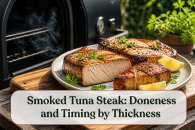
Learning how to smoke fish starts with two decisions: choose a fish that can stay intact on the grate, then measure the thickest part you need to cook. A thin cod fillet and a thick salmon center cut should not share the same first-check time, even when the smoker is set to the same temperature.
This guide covers hot smoking only. The smoker operates as a cooking appliance, and the coldest part of every fillet must reach 145°F. Cold-smoked fish requires validated salting, time, temperature, storage, and process controls that a casual backyard recipe cannot provide, so it is outside this method.
Quick answer: Keep fish refrigerated while preparing it, season or brine for flavor rather than preservation, dry the surface, and hot-smoke at 200–225°F. Begin checking according to texture and thickness, but remove the fish only after the thickest section reaches 145°F. Serve promptly or refrigerate within 2 hours.
Choose a Fish and Measure Its Thickness
| Fish group | Common examples | Useful cut | Handling note |
|---|---|---|---|
| Oily and firm | Salmon, Arctic char, mackerel | Skin-on center fillet | Forgiving texture; rich fish still collects smoke quickly |
| Lean and firm | Halibut, mahi-mahi, swordfish | Thick steak or center fillet | Needs careful temperature monitoring to prevent dryness |
| Lean and delicate | Cod, haddock, flounder | Even fillets in a pan or on a mesh mat | Can split when moved; support the full piece |
| Small whole fish | Trout, snapper, branzino | Cleaned whole fish | Check the thick flesh behind the head, away from bone |
Buy seafood from a reputable source and reject packages with broken seals or strong sour, rancid, or ammonia-like odors. FDA guidance recommends keeping seafood cold and using fresh fish within a short refrigerated window. If the fish is frozen, thaw it in the refrigerator rather than on the counter.
Measure the thickest edible section with a ruler. Weight is less helpful because a broad, thin side and a compact center cut can weigh the same while cooking at different rates. If one fillet tapers sharply, cut the thin tail away and cook it as a separate piece.
Species-by-Thickness Hot-Smoking Matrix
| Texture and cut | Thickness | Smoker setting | Planning range | First check |
|---|---|---|---|---|
| Delicate lean fillet | ½–1 inch | 200–225°F | 30–60 minutes | At 25 minutes |
| Firm lean fillet or steak | 1–1½ inches | 200–225°F | 45–90 minutes | At 40 minutes |
| Oily skin-on fillet | 1–1½ inches | 200–225°F | 60–120 minutes | At 50 minutes |
| Small whole fish | 1½–2½ inches at thickest point | 225°F | 60–120 minutes | At 50 minutes |
These are planning ranges, not safety endpoints. Species, starting temperature, skin, bone, moisture, wind, and actual grate heat can change the cook. Use the clock to decide when to begin checking and a calibrated thermometer to decide when the fish is cooked.
Very thin fillets may be better in a perforated pan than directly on wide grates. Pieces thicker than the table shows need earlier monitoring relative to the expected finish, not an arbitrary extra hour. The site’s smoking time and temperature chart explains why a schedule and a safe endpoint serve different jobs.
Seasoning and Brining Without a Preservation Claim
A light dry brine improves seasoning and helps dry the exterior. Use about 0.75% kosher salt by fish weight when you have an accurate gram scale, or season lightly and evenly when you do not. Refrigerate the fish on a rack for 30 minutes to 2 hours, depending on thickness. Rinse only if the surface tastes excessively salty, then pat completely dry.
A wet brine can also season fish, but recipes vary by salt type, volume, and fish thickness. Keep both fish and brine refrigerated, use a food-safe nonreactive container, and discard the used liquid. This brief flavor brine is not a cure and does not make cold smoking safe.
After brining, let the surface dry uncovered in the refrigerator until it feels slightly tacky rather than wet. This surface helps smoke adhere more evenly. Do not leave fish at room temperature for hours to form it.
Hot-Smoked Fish Method
1. Prepare the work area
Wash hands and begin with clean utensils, a clean tray, and a second clean tray for cooked fish. Keep raw seafood and its juices away from garnishes, sauces, bread, and cooked food. Return unused portions to the refrigerator while the smoker preheats.
2. Preheat for clean, gentle smoke
Stabilize the cooking grate between 200 and 225°F. Alder, apple, maple, pecan, or cherry can complement fish. Use a restrained amount: exposed fish picks up smoke faster than a large roast. Our wood pairing guide compares mild and stronger species.
Wait for clean exhaust instead of placing fish over a struggling, smoldering fire. A water pan is optional; cooker design and airflow matter more than adding humidity by habit.
3. Arrange by thickness
Place skin-on fillets skin-side down. Put delicate skinless pieces on a lightly oiled mesh mat, perforated pan, or small sheet of foil with open edges for smoke exposure. Leave space between portions. Point the thick ends toward the warmer area and thin tails toward the cooler side.
If cuts differ substantially, group them by thickness and set separate timers. Do not stack fish or fold a tail under unless you deliberately want to make the thickness more even.
4. Probe the thickest flesh
For a thick fillet, insert a leave-in probe from the side into the center of the deepest section. Keep the sensing tip away from the grate, bone, and the belly cavity of a whole fish. Thin fillets are easier to check near the end with a fast instant-read thermometer inserted sideways.
Check more than one portion and test both the thick center and any unusually dense area. The digital thermometer guide covers the different roles of leave-in and instant-read probes.
5. Cook to 145°F, not to appearance alone
Start checking at the matrix time and rotate the pan only if the smoker has a known hot spot. Fish often becomes opaque and flakes as it cooks, but color and flaking are not substitutes for a thermometer. Continue hot smoking until the coldest measured point reaches 145°F.
Transfer the cooked fish to the clean tray. Do not return it to a tray that held raw seafood. If a thick portion is behind, move only that piece back to the smoker and keep checking it.
What About Salmon, Trout, Cod, and Mackerel?
Salmon and trout
Skin-on center cuts are stable on the grate and suit mild fruitwood or alder. White protein may appear on the surface when muscle fibers contract. Gentle heat reduces it, but it is harmless and not a doneness measurement.
Cod and other delicate white fish
Use even pieces and physical support beneath them. A thin layer of oil on the support can reduce sticking. Begin checking early because lean fish has less fat to buffer overcooking.
Mackerel and other strongly flavored oily fish
Rich fish pairs with smoke, but it does not need a heavy wood dose. Keep airflow clean and use a mild or medium wood first. Strong smoke plus prolonged exposure can produce a harsh finish.
Shellfish uses a separate plan
Do not reuse this thickness matrix for shrimp. Small shellfish cooks much faster and needs different preparation. Use the site’s dedicated smoked shrimp recipe instead.
Why This Guide Excludes Cold Smoking
Cold smoking intentionally holds fish at temperatures that do not cook it. FDA material on smoked-fish processing discusses controls for pathogens and toxin formation, including precise brining, refrigeration, process monitoring, and storage. Those controls cannot be reduced to a wood choice and a clock time in a backyard article.
Do not improvise cold-smoked salmon by turning off the heat after a brine. This method is hot smoking: the chamber provides cooking heat and every portion reaches 145°F. Commercially prepared cold-smoked fish should be handled according to its label and FDA advice, especially for people at higher risk of foodborne illness.
Troubleshooting
The outside is dry before the center reaches 145°F
The cut may be too uneven, the grate hotter than the controller reports, or the probe too close to the surface. Separate thin sections, verify grate temperature, and use a gentler 200°F setting for delicate fillets.
The fish sticks or breaks
Start with a clean grate and support delicate fish. Let the cooked piece release before forcing it. Slide a wide spatula beneath the full fillet rather than lifting one end with tongs.
The flavor is bitter
Reduce wood quantity and correct poor combustion. Wet, heavy smoke deposits harsh flavor quickly on a moist fillet. Seasoning and a clean fire should remain noticeable beneath the smoke.
The tail is ready before the center
Remove the tail as a separate portion or shield it loosely while the center finishes. Next time, divide the fillet by thickness before cooking.
Serving and Storage
Serve hot-smoked fish with lemon, herbs, pickled vegetables, rice, potatoes, or a crisp salad. Keep cold accompaniments refrigerated until serving. Remove pin bones before presenting the fish, but warn guests that a bone may remain in whole fish.
Refrigerate cooked fish in shallow covered containers within 2 hours. Divide a large batch so it cools promptly. Reheat leftovers gently and discard seafood that has been left out beyond the safe serving window.
Sources
- FoodSafety.gov: Safe Minimum Internal Temperatures
- FDA: Selecting and Serving Fresh and Frozen Seafood Safely
- FDA: Processing Parameters Needed to Control Pathogens in Cold-Smoked Fish
Measure first, use the clock only as a first-check reminder, and let the coldest 145°F reading decide when the fish is done. That simple order keeps the method useful across species without pretending every fillet cooks alike.