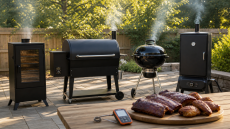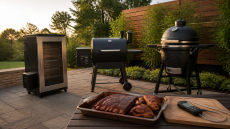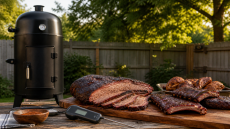

To hold 225°F, start with a clean cooker, measure temperature at grate level, establish a small steady fire, and make tiny airflow changes. Keep the lid closed, protect the smoker from wind, and wait several minutes after every adjustment. A steady range around the target is more useful than chasing one exact number.
- Use a separate probe at the cooking grate, not only the lid thermometer.
- Make one small vent, fuel or controller change at a time.
- Give the cooker time to respond before touching the controls again.
- Use safe food temperatures from the smoking times and temperatures chart.
How to Maintain 225°F in a Smoker Without Constant Adjustments
225°F is a useful low-and-slow target for brisket, pork shoulder, ribs and many other cooks, but it is not a magic number. A smoker naturally moves through a range as fuel lights, meat absorbs heat, wind changes and the lid opens. The goal is to create a calm, repeatable fire that stays close to 225°F without turning every cook into a full-time control exercise.
The method depends on the cooker. An electric smoker cycles a heating element. A pellet smoker meters fuel through an auger and controller. Charcoal relies on fire size and airflow, while propane depends on a burner, vents and the wind around the cabinet. The principles below apply to all four, but the owner’s manual always takes priority for fuel, clearances and controller settings.
First, define what 225°F means in your cooker
Built-in thermometers are often mounted in the door or upper wall, not directly beside the food. That location can be hotter or cooler than the grate where meat is cooking. Before changing fuel or vents, place a reliable probe at grate level, away from the wall and not touching metal. Compare it with the display after the cooker has preheated for at least 20 to 30 minutes.
A 10°F to 25°F difference is common enough to investigate rather than panic over. If the grate probe reads 225°F while the lid gauge reads 250°F, the smoker may already be operating correctly. Use one measurement consistently for your notes. Our digital meat thermometer guide explains probe types, placement and calibration.
Prepare the smoker before lighting it
A dirty fire pot, blocked vent or grease-coated drain makes temperature control harder. Remove excess ash from a charcoal cooker after the previous fire is completely cold. On a pellet grill, inspect the burn pot and follow the manual for ash removal. Check that the exhaust path is open and that the grease channel is not blocked. Electric and propane smokers also need clear vents and a clean, correctly seated drip pan.
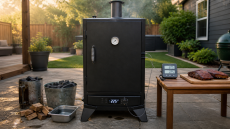
Position the cooker on a level, non-combustible surface with the manufacturer’s clearances. Wind can pull heat out of a cabinet or make a charcoal fire burn too quickly. Do not improvise insulation with blankets or plastic. If cold-weather cooking is frequent, use a purpose-made cover or insulation jacket approved for that model.
Use a controlled preheat
Preheat with the same routine each time. Start the cooker empty, allow the initial ignition smoke to clear, and wait for the temperature to settle before adding food. Adding a cold brisket, a full water pan and several racks at once can drop the temperature sharply. That drop is normal; opening the door repeatedly to “help” it recover usually makes the recovery slower.
Keep a small log with the outdoor temperature, wind, fuel amount, controller setting and grate reading. After three or four cooks, the notes will tell you more than a generic temperature rule. You may find that your smoker holds 225°F best at a controller setting of 235°F, or that one vent position works only when the weather is calm.
Charcoal smokers: build a small, clean fire
Charcoal cookers are easiest to control when the fire starts small. Use a chimney or starter method that creates fully lit coals, then place them where the manual recommends. A minion-style arrangement, with a small group of lit coals gradually igniting unlit fuel, can provide a longer and steadier burn than spreading a large pile of burning charcoal across the basket.
Begin with vents more open than you expect while the cooker comes up to temperature. As the grate approaches 200°F, begin closing the intake in small increments. It is easier to slow a rising fire than to revive a fire that has been starved of oxygen. Make one adjustment, wait 10 to 15 minutes, and then check the grate probe again.
Keep the exhaust vent at least partly open unless the manual says otherwise. Closing the exhaust to trap smoke can create stale, bitter smoke and may restrict the fire unpredictably. Add fuel before the fire is nearly exhausted, and avoid dumping a large load of cold charcoal onto a stable cook unless you have planned for the temperature swing.
Pellet smokers: support the controller
Pellet smokers are designed to regulate heat automatically, but the controller cannot correct every problem. Use dry, food-grade pellets and store them in a sealed container. Damp pellets crumble, bridge in the hopper or burn inconsistently. Keep the hopper filled enough to prevent the auger from running empty during a long cook, while still following the manual’s guidance for safe storage.
Give the startup and shutdown cycles time to finish. Unplugging the cooker immediately after a cook can leave pellets smoldering in the burn pot. If the temperature swings, check the burn pot, fan intake, chimney and probe before changing the set point. A dirty temperature sensor can report a false reading and cause the controller to feed too much or too little fuel.
Electric smokers: expect cycling, not a perfectly flat line
An electric smoker cycles its heating element on and off. The display may show a target while the grate temperature moves above and below it. That cycling is normal when the average grate temperature is appropriate. Avoid opening the door to correct every small swing; the element needs time to bring the cabinet back to its operating range.
Use the outlet, cord and weather protection specified by the manufacturer. A long or unsuitable extension cord can reduce performance and create a safety risk. Keep the controller and plug dry, and never cover a hot unit in a way that blocks ventilation. If the element stops heating, use the manual’s troubleshooting procedure rather than bypassing a safety switch.
Propane smokers: balance flame and airflow
Propane cabinets can settle near 225°F when the burner is adjusted low and the vents are set for steady airflow. Wind is often the biggest variable. A sheltered position can help, but never place the smoker in a garage, enclosed porch or other space where carbon monoxide can collect. Inspect the hose, regulator and connections, and perform the leak check required by the manual.
If the burner goes out, turn the control and cylinder off and wait the specified time before relighting. Do not keep adding gas while trying to diagnose a flame problem. Keep the water pan and wood tray positioned exactly as the manufacturer shows; a misplaced pan can restrict airflow or create an unsafe flare-up.
Water pans: useful buffer, not a temperature cure
A water pan adds thermal mass and can soften temperature changes when the door opens. It also catches drips in many cabinet designs. Fill it according to the manual and check it during a long cook, but do not assume more water always means better control. A full pan can extend recovery, and an empty pan can change the heat pattern dramatically.
Keep the pan clean and avoid overfilling it near the fire. If you use another liquid, confirm that the cooker’s materials and instructions allow it. The water pan cannot compensate for a blocked exhaust, oversized fire or inaccurate thermometer.
At-a-glance temperature-control adjustments
| What you see | Likely cause | First response |
|---|---|---|
| Temperature keeps rising | Too much lit fuel or too much intake air | Reduce intake slightly and wait 10–15 minutes |
| Temperature falls slowly | Cold food, weather or a normal controller cycle | Keep the lid closed and confirm grate probe placement |
| Fast, repeated swings | Wind, blocked sensor, damp fuel or leaking door | Check the environment, fuel and seals before changing settings |
| Heavy white smoke | Restricted airflow or smoldering fuel | Open the exhaust as instructed and reduce excess wood |
| Hot grate but cool food | Probe placement or a large cold load | Check the food probe and allow recovery time |
How long should you wait after an adjustment?
Metal cabinets and ceramic cookers respond slowly. A small vent change may take 10 to 20 minutes to show at the grate. Pellet and electric controllers can take several cycles to settle, especially after you add cold meat. Write down the time of each adjustment. If you make three changes in five minutes, you will not know which one caused the eventual swing.
Use a simple rule: adjust one variable, wait, then measure. If the temperature is within a reasonable cooking range and the smoke is clean, leave it alone. Meat does not benefit from a perfectly flat graph if achieving that graph means opening the lid repeatedly.
Why the reading changes after you load meat
Cold meat, a cold water pan and a freshly opened door all absorb energy. The temperature display may fall even though the fire is healthy. That does not mean you should immediately add charcoal or turn the burner higher. Give the cooker time to replace the heat that left through the open door. The same principle applies after you add a large piece of cold meat: the first reading is a recovery reading, not the new steady state.
Why a short spike is not automatically a problem
When a charcoal cooker climbs briefly to 240°F or a pellet grill overshoots during ignition, the food is not ruined. Check whether the reading returns toward the target without intervention. A short spike can be less damaging than a series of aggressive corrections that leaves the fire starved, smoky or unstable. Concentrate on the trend over 15 to 30 minutes, the smoke quality and the food’s internal temperature.
What to do when the smoker is 25°F low
First confirm the probe. Make sure it has not slipped against the grate, wall or water pan. Check whether the cooker is still recovering from a lid opening or a large cold load. If the fire is genuinely weak, add the small amount of fuel or airflow the manual allows. On a pellet or electric model, check the fuel, burn pot, sensor and power connection before raising the set point.
What to do when the smoker is 25°F high
Stop adding fuel and close the intake or lower the controller setting in small steps. Do not shut every vent at once; a charcoal fire can create dirty smoke when it is starved. Keep the exhaust path open as instructed. If the cooker continues climbing, move food to a safe temporary location only if necessary and follow the manufacturer’s shutdown guidance.
When 225°F is the wrong target
Some foods benefit from a different cooking range. Poultry skin may need a hotter finishing stage, fish can dry out if held too long, and a thick brisket may need a planned wrap or temperature change. Check the recipe and the cooker manual before treating 225°F as a rule for every meal. A good temperature-control habit is flexible: it gives you a stable starting point, then lets the food, the recipe and safe internal temperature guide the finish.
Food safety still comes before the target number
225°F is a cooking environment, not a doneness guarantee. Insert a clean food probe into the thickest part of the meat and avoid touching bone. Follow the USDA FSIS smoking guidance for safe minimum internal temperatures and handling. If a cook stalls for an unusually long time, use temperature and tenderness—not the clock alone—to decide when it is ready.
- Calibrate or verify the food thermometer before a long cook.
- Keep raw and cooked tools separate.
- Do not taste meat that has spent an uncertain amount of time at unsafe temperatures.
- Rest, serve and refrigerate the finished food according to safe handling guidance.
Build a repeatable 225°F routine
The most reliable cooks follow the same sequence: clean the cooker, position the probe, preheat, establish clean smoke, load the food, record the starting temperature and make only small adjustments. If you change wood, fuel, water, vent position and controller setting at the same time, you lose the information that would help you improve.
For a broader first-time setup routine, read our smoker grill guide. If you are still choosing a cooker, start with the smoker buying hub and compare fuel types before buying accessories.
Holding 225°F is mostly a patience and measurement problem. Use a grate-level probe, a clean cooker, a modest fire and small changes. Protect the smoker from wind, keep the exhaust path clear, and wait for the cooker to respond. A stable range with clean smoke will produce better results than constant knob-turning.