Hickory is one of the most recognizable barbecue woods: savory, robust, and slightly sweet. It is stronger than apple or cherry but generally less sharp than mesquite. That makes it useful with pork, beef, chicken, and game—but also easy to overuse on a small or delicate cook.
The right amount of hickory depends on the smoker. One chunk in a charcoal cooker is not equivalent to a cup of chips in a gas-grill smoke box, a hopper of blended pellets, or a hickory split feeding an offset. Start conservatively, watch the smoke quality, and record what happened before adding more next time.
Quick answer: Use hickory when you want a classic, medium-strong barbecue profile. Begin with one small chunk in a charcoal smoker, a modest fill in a manufacturer-approved chip tray, or a hickory blend in a pellet grill. For an offset, treat hickory as part of the clean-burning fuel system and soften it with oak if straight hickory tastes too assertive.
What Hickory Smoke Tastes Like
Hickory smoke is commonly described as rich, savory, and subtly sweet. People sometimes call it bacon-like because it is traditional in cured-pork cooking, not because the wood literally adds bacon fat or salt. Compared with common alternatives:
- Apple and cherry: milder, fruitier, and easier on poultry, fish, and vegetables.
- Oak: steady and neutral-to-medium, often a useful base fuel for long cooks.
- Pecan: related in character but usually perceived as rounder and sweeter.
- Mesquite: more forceful and earthy, with a greater risk of a sharp finish during long exposure.
Flavor intensity is not determined by species alone. A dirty, smoldering fire can make mild wood unpleasant, while a clean-burning hickory fire can taste balanced. Bark quantity, food surface moisture, exposure time, and cooker airflow all matter.
Best Foods to Smoke With Hickory
| Food | Hickory fit | Starting approach | What to watch |
|---|---|---|---|
| Pork shoulder and ribs | Excellent | Straight hickory or hickory-oak blend | Long exposure can become heavy |
| Beef brisket and chuck | Excellent | Hickory with oak for a steady base | Keep the fire clean through the stall |
| Whole chicken | Good | Blend hickory with apple or cherry | Poultry skin takes smoke quickly |
| Sausage | Good | Light hickory exposure | Fat and seasoning already carry flavor |
| Salmon and mild fish | Limited | Use a very small dose or choose fruitwood | Strong smoke can cover the fish |
| Vegetables and cheese | Selective | Short, light exposure | Small foods absorb smoke rapidly |
Weber’s current official flavor guide places hickory with beef, pork, and chicken, which is a sensible starting boundary. Preference still matters. If you already use the broader PickASmoker wood pairing guide, think of this page as the hickory dose and blending companion rather than another all-species chart.
How Much Hickory to Use by Smoker Type
The amounts below are conservative first-cook starting points. Cooker manuals take priority, and some models do not accept loose chips or chunks at all.
| Smoker type | Hickory form | Conservative starting point | Adjustment rule |
|---|---|---|---|
| Charcoal kettle or bullet | Chunk | One small fist-size chunk for a short/medium cook | Add a second small chunk only on a long cook if the first result was too light |
| Gas grill with smoke box | Chips | One modest manufacturer-approved box or packet | Replenish once only if the manual allows and smoke ended very early |
| Electric smoker | Chips or puck | One normal tray/load specified by the maker | Do not pack above the tray line or improvise around the heating element |
| Pellet smoker | Pellets | Use a hickory blend for the full hopper | Choose a milder blend before adding an auxiliary smoke tube |
| Offset smoker | Split logs | Use oak as the base with roughly one hickory split for every two or three oak splits | Change split ratio only after the fire is already clean and stable |
A “small fist-size” chunk is a visual starting point, not a calibrated unit. Chunk density and dryness vary. Keep a simple cook note with the piece count, approximate size, meat, cooker, and smoke duration. Your own repeatable reference will soon be more useful than a universal cup measurement.
Chunks, Chips, Pellets, and Splits Are Not Interchangeable
Chunks for charcoal
Chunks release smoke over a longer window than chips. Nestle a chunk near the edge of the lit fuel so it heats gradually instead of sitting in a cold, oxygen-starved pocket. You do not need smoke pouring out for the entire cook; meat continues cooking after the strongest smoke period ends.
Chips for a designed tray or smoke box
Chips heat quickly and suit gas or electric equipment that includes a proper container. Follow the model manual on soaking, tray fill, and replenishment. Never scatter chips onto a burner, electric element, or grease channel unless the manufacturer explicitly designs the cooker for it.
Pellets for pellet equipment
Pellets are both fuel and flavor in a pellet smoker. Brand composition varies: a bag labeled hickory may be pure hickory or a blend with an oak base. Read the label. If you want less intensity, choose a fruitwood blend rather than restricting pellet feed, because the controller needs normal fuel flow to maintain heat.
Splits for an offset
Offset smokers run on combustion management. A split must be dry enough, appropriately sized for the firebox, and given sufficient airflow to burn cleanly. Adding more hickory while the existing fire is smoldering does not add better flavor; it adds more incomplete combustion.
Hickory Blend Matrix
| Blend | Starting ratio | Flavor goal | Good first cook |
|---|---|---|---|
| Hickory + oak | 1:2 by piece count | Classic smoke with a calmer base | Brisket or pork shoulder |
| Hickory + apple | 1:2 | Savory smoke with a mild fruity edge | Whole chicken or pork loin |
| Hickory + cherry | 1:2 | Robust flavor with sweet aroma and dark color | Ribs or chicken quarters |
| Hickory + pecan | 1:1 | Full barbecue profile with a rounder finish | Sausage or beef roast |
Ratios compare the same form of wood: chunk to chunk, split to split, or blend percentages on a pellet label. Do not compare a cup of chips with one split. Start with the table, then adjust one component at a time.
Use Hickory With Pork
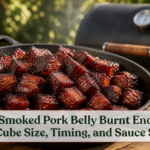
Pork shoulder, ribs, belly, and cured pork are the easiest hickory matches. Fat and long cooking time can carry the robust flavor. For a leaner cut such as the site’s smoked pork loin, use a lighter dose or a hickory-apple blend. Lean meat has less richness to balance a heavy smoke coating.
Sugary rubs do not require more smoke. Smoke intensity and bark sweetness stack, so a restrained fire often produces a clearer final flavor.
Use Hickory With Beef
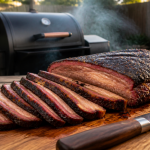
Hickory works well with brisket, chuck roast, plate ribs, and other beef cuts that spend hours in the smoker. Oak-hickory is a practical offset combination because oak can provide a predictable coal bed while hickory supplies character.
For a short beef cook, use less wood than for brisket. Tenderloin, tri-tip, and steaks have limited exposure time and may receive a final sear; the crust and seasoning should remain visible in the flavor profile.
Use Hickory With Chicken
Chicken can take hickory, but it rarely needs a full heavy dose. Start with one small chunk or a hickory-fruitwood blend. The higher-heat method in our whole smoked chicken guide has a shorter smoke window than low-and-slow pork, so clean smoke early in the cook matters most.
Dark meat tolerates hickory better than a small skinless breast. If your last poultry cook tasted like an ashtray, reduce the hickory before changing the rub.
Clean Smoke Matters More Than Smoke Color Alone
Thin, lightly visible smoke with a pleasant wood aroma is the goal. Thick white or gray clouds that smell acrid indicate a wood or airflow problem. Blue smoke can be difficult to see in bright daylight, so use odor and fire behavior along with color.
- Preheat the cooker and establish airflow before adding food.
- Use dry, properly sized wood.
- Do not choke the exhaust to “hold smoke.”
- Keep grease and old soot from restricting airflow.
- In an offset, warm the next split on the firebox so it ignites promptly.
Thermometers, heatproof gloves, ash tools, and safe fuel storage are covered in our essential smoker accessories guide. Flavor experiments are only useful when the cooker is operating safely and consistently.
Wood Safety: What Not to Burn
Use only clean, dry, untreated hardwood that is identified and intended for cooking. Do not use pressure-treated lumber, painted or stained boards, plywood, particleboard, glued furniture scraps, driftwood, moldy wood, or an unknown species. Construction scraps may contain preservatives, coatings, adhesives, or contaminants that do not belong near food.
Store smoking wood off damp ground with airflow and rain protection. Surface moisture makes ignition difficult; mold, rot, or chemical odor is a reason to discard the piece. Follow the cooker manual for accepted fuel forms and clearances.
Troubleshooting Hickory Smoke
The food tastes bitter
Reduce wood quantity, improve airflow, and check for a smoldering fire. Bitter flavor is often a combustion problem amplified by too much hickory. Do not try to fix it with a sweeter sauce until the fire is clean.
There is no noticeable smoke flavor
Confirm the wood actually ignited or smoldered in the designed tray. Add a small amount on the next cook, not several extra pieces during the current one. A very short cook may simply need earlier smoke exposure.
The smoke stops after an hour
That can be normal. A clean early smoke period is sufficient for many foods. Replenish only when the cooker manual allows it and your previous result was genuinely too mild.
Every cook tastes different
Standardize the wood form, piece size, food weight, and vent position. Photograph the starting fuel setup and log the weather. Changing hickory quantity, rub, and cooker temperature at once makes the result impossible to diagnose.
Sources
For your first hickory cook, write down one conservative dose before lighting the smoker. Keep the fire clean and the other variables steady. If the food needs more smoke, you will know exactly what to change next time.